
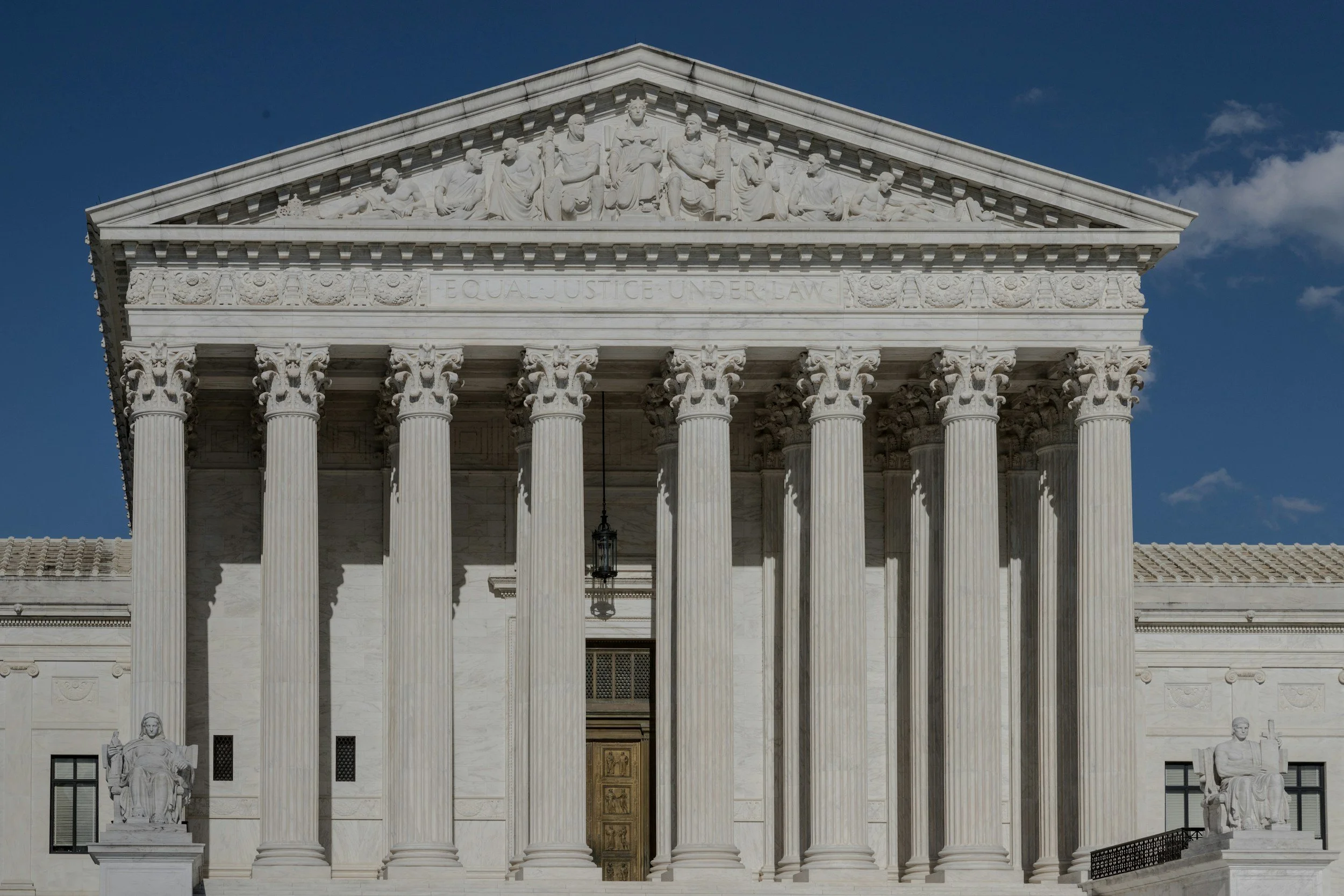
The Supreme Court Just Brought Back SAVE. Here Is What It Means for Your Vote.
THE DISPATCH — CIVIC EDUCATION
The Court says a federal citizenship check can be used on voter lists again, but a 90-day rule still limits how much it can change this November.
On Friday, Sept. 25, the U.S. Supreme Court said the Trump administration can go back to using an upgraded federal tool to check whether people on voter lists are U.S. citizens. The vote was 6 to 3. The tool is called SAVE. A federal judge had shut it down in June.
Election Day is Tuesday, Nov. 3. That is 39 days away. So the big question is a simple one. Can this change who gets to vote this year? That might sound like a fight over government computer files. It's not. It's about whether your neighbor's name is still on the voter list when they walk in to vote.
FIRST: WHAT IS SAVE?
SAVE stands for Systematic Alien Verification for Entitlements. It started as a way for agencies to check if someone was a noncitizen before handing out government benefits. Last year, the Department of Homeland Security (DHS) rebuilt it. Now it connects to Social Security records. It can also check huge lists of names all at once. DHS urged states to upload their voter lists. At least 67 million voter registrations have been run through it, according to the Associated Press.
Here is a way to picture it. Your school checks your name against the attendance book from your old school. But that old book is out of date. It says you never showed up, even though you moved and enrolled years ago. Now your new school marks you as a problem. You did nothing wrong. The book was just old. That is the worry with SAVE. Someone who became a U.S. citizen years ago can still look like a noncitizen if the federal records never caught up.
WHAT HAPPENED
In June, U.S. District Judge Sparkle Sooknanan in Washington, D.C., blocked the new version of SAVE. She said it broke federal privacy rules and could get voters wrongly removed. The League of Women Voters, some of its state groups, and the Electronic Privacy Information Center had sued over it. A federal appeals court left her order in place.
The Trump administration asked the Supreme Court to step in. On Friday, the Court did. In an unsigned order, the majority said a 1996 law lets DHS get citizenship information from other federal agencies. It also said the government has a duty to answer when states ask for help checking citizenship. And it said the judge's order blocked "individualized" checks, which federal law allows even during the 90 days before an election.
Justice Ketanji Brown Jackson disagreed. Justices Elena Kagan and Sonia Sotomayor joined her. She warned that real voters could lose their registration by mistake. She also said letting SAVE tap Social Security records is likely not legal. And she noted that the effect on this year's election should be small.
This is an emergency order, so it is for now. The lawsuit goes on.
THE 90-DAY RULE: DOES THIS BREAK IT?
Quick fix first. The 90-day rule is a federal law, not a state law. It is part of the National Voter Registration Act. It says states must finish any program that systematically removes people from voter lists at least 90 days before a federal election. For Nov. 3, that deadline was Wednesday, Aug. 5. It applies to every state.
Think of a football game. A coach can't rewrite the team roster in the fourth quarter. Fixing one player's paperwork is fine. Swapping out dozens of names at once is not.
That is the line the Court drew. "Systematic" means a big, list-wide sweep. "Individualized" means one voter at a time, with a real look at that person's case. CNN reports that the Court's opinion leaned on individual checks while suggesting that mass purges close to Election Day are still against federal law.
Here is where the fight is. The administration and some Republican state officials say the 90-day rule should not cover removing noncitizens who were never allowed to register. Critics say that is wrong. They say a big batch of SAVE flags, handled fast, is a mass purge with a different name. Courts will likely have to sort that out.
What about Maryland? The federal law applies here too. Use of SAVE is voluntary, and we have seen no sign that Maryland has joined the expanded program. In April, State Administrator of Elections Jared DeMarinis said the federal "State Citizenship List" has no legal force in Maryland. The official voter list here is run by the Maryland State Board of Elections.
WHO COULD BE AFFECTED
Naturalized citizens. These are people who became citizens after living here as permanent residents. Their federal records may not show it yet.
Voters in states that choose to use SAVE. Not every state does. Maine's Secretary of State, Shenna Bellows, has refused, and she says the ruling changes nothing about how Maine runs its elections.
Real people who were wrongly flagged. In Texas, about 20 percent of the 2,724 voters first flagged by SAVE were later found to be citizens and put back on the rolls. In Travis County, officials checked 97 flagged voters and found that at least 10 percent, and likely up to 21 percent, were citizens. Anthony Nels of Denton, Texas, became a citizen more than ten years ago. He was flagged anyway. His registration was canceled for a time until he got a new passport.
Voters in Maryland. For now, the direct effect looks small. But what happens in other states shapes the national fight over who gets to stay on the rolls.
WHAT THIS MEANS FOR NOV. 3
The short answer: probably less than the headlines suggest, but not nothing.
Why less. Use of SAVE is voluntary. The 90-day window has closed. Election law expert David Becker says existing law blocks most states from systematic purges this close to an election. Even Justice Jackson said this year's impact should be small.
Why not nothing. Voters can still be challenged or removed one at a time. Mistakes hit real people, and some may only find out at the polls. Fear and confusion can also keep eligible people home. And SAVE will still be here after Nov. 3, when the 90-day rule is no longer close.
Your safety net in Maryland. You can register or update your registration online by Tuesday, Oct. 13. If you miss that, you can register and vote on the same day during early voting, Thursday, Oct. 22 through Thursday, Oct. 29, or on Election Day. Bring proof of where you live.
WHAT SUPPORTERS OF THE RULING SAY
The administration calls SAVE a common-sense tool. DHS General Counsel James Percival said the government had to run to the Supreme Court just to use its own data to help states stop noncitizens from voting illegally. The Court's majority described the system as important. Texas defended it in court. Stephen Richer, the Republican former top election official in Arizona's largest county, said the ruling could be a positive step if used responsibly. He added that SAVE should be a starting point, not the final word on anyone's citizenship. Supporters also say that clean voter lists help people trust elections.
WHAT CRITICS OF THE RULING SAY
The people who sued called the ruling "profoundly disappointing." They said it puts millions of Americans at risk of being unfairly targeted before the midterms. Justice Jackson said that hurting even a few lawful voters outweighs the government's harm from waiting.
Critics also point to the numbers. Before 2024, Georgia found 20 noncitizens among 8.2 million registered voters. Ohio prosecutors got nine indictments over ten years. DHS says its investigations have led to 160 arrests nationwide. Homeland Security Secretary Markwayne Mullin suggested there could be as many as 250,000 noncitizens registered in four states. That claim has not been backed up, and state election officials said it was far above what they found. A federal whistleblower also said DHS's own August search of state rolls was rushed and full of errors. DHS says it is doing that work diligently and professionally.
WHAT WE DON'T KNOW YET
- How long this lasts. The order is an emergency step, and the lawsuit is not over.
- Whether any state tries a mass removal now, and whether courts stop it.
- Whether Maryland or Queen Anne's County voters will be touched at all. We have seen no sign so far.
- How DHS will use SAVE in its project to build lists of adult citizens in each state.
WHAT YOU CAN DO
- Check your voter registration today at elections.maryland.gov. Fix anything that is wrong by Tuesday, Oct. 13.
- If you are a naturalized citizen, or you know someone who is, do not ignore any notice about your registration. Call the Queen Anne's County Board of Elections right away.
- Know the safety net and share it. Same-day registration is open during early voting, Oct. 22 to 29, and on Nov. 3. If someone says they were removed by mistake, point them to Election Protection at 866-OUR-VOTE.
Want to double-check your own registration and the key dates?
See Maryland's Official Election Dates
Same Playbook, Different County: How Two Groups Are Remaking School Boards
You've probably heard the phrase "parental rights" attached to a school board race near you. Maybe a chapter meeting got announced at the fire hall. Maybe a candidate's yard signs mentioned "stopping indoctrination." It can look small and local, like a fight over one book or one curriculum.
It's not. It's about who ends up deciding which kids get to see themselves reflected in their own schools, and who ends up out of a job because of it.
FIRST: WHAT DOES A SCHOOL BOARD ACTUALLY CONTROL?
That's exactly what's been happening, over and over, in districts around the country, including here in Maryland.
WHAT HAPPENED
Two organizations show up again and again in these fights.
Moms for Liberty was founded in January 2021 in Florida by Tina Descovich and Tiffany Justice, two former Florida school board members. It grew fast, claiming 285 chapters and more than 100,000 members within a couple of years. Its first major PAC donation, $50,000, came from Julie Fancelli, the Publix supermarket heiress who also helped fund the "Stop the Steal" rally that preceded the January 6 attack on the U.S. Capitol. The Southern Poverty Law Center classifies Moms for Liberty as a far-right group that "engages in anti-student inclusion activities," and has documented its affiliations with the Proud Boys and the anti-LGBTQ group Gays Against Groomers.
The 1776 Project PAC was founded later that same year, 2021, by political consultant Ryan Girdusky. Its stated mission is electing "reform-minded conservatives" to school boards, opposing critical race theory and diversity, equity and inclusion programs. In 2022, Maryland's state prosecutor and State Board of Elections fined the PAC more than $20,000 after it sent nearly 14,000 unlabeled campaign texts to Carroll County voters, a violation of Maryland's campaign disclosure law.
These two groups are not the same organization, but they run in the same lane. They frequently endorse the same candidates in the same races. National coverage routinely describes them as a pair: "parental rights groups," "conservative advocacy organizations." The Maryland Democratic Party names both together as a "dangerous fringe agenda" and has taken the unusual step of directly funding counter-campaigns against their candidates in school board races, races that are legally nonpartisan.
In Maryland, the 1776 Project PAC has endorsed more candidates than in any other state. In the 2024 election cycle alone, it endorsed 19 Maryland candidates across nine school districts and spent $75,409.58 on 13 candidates in Cecil, Queen Anne's, Talbot, Calvert, Somerset, and St. Mary's counties. It won control of the Somerset and Calvert county boards outright that cycle, and came close in Talbot. Moms for Liberty, meanwhile, has active chapters in Talbot, Carroll, Wicomico, Howard, Montgomery, and Anne Arundel counties. In Carroll County, the chapter succeeded in getting 21 books banned from public school libraries.
THE PLAYBOOK
Strip away the branding and the pattern is consistent enough that it has been documented, county by county, for several years now. It runs the same way almost everywhere:
A local chapter forms out of a specific flashpoint: a mask mandate, a library book, an email from a superintendent about equity or Black Lives Matter. Candidates are recruited to run as a slate, usually under shared, vague language like "parental rights" or "stop the indoctrination." National money and coordinated messaging flow into races that are, on paper, nonpartisan and local. The slate wins, often while being outspent locally but backed with unusual amounts of outside PAC money. Then, within days or hours of being sworn in, the new board majority moves fast: personnel changes, often targeting the district's superintendent, especially if that superintendent is Black; policy reversals, like disbanding DEI committees or banning books; and sometimes outside consultants brought in to rewrite curriculum.
This isn't a theory about coincidence. Moms for Liberty has taught it as a formal strategy at its own national conference. In 2023, a presenter named Jordan Adams, whose consulting firm has been hired by several "flipped" boards, ran a session at the group's annual summit called "The First 100 Days: Getting Flipped School Boards to Take Action." Attendees were handed worksheets on how to move quickly before opposition could organize.
THE DAMAGE
The clearest example is Berkeley County, South Carolina, the state's fourth-largest school district. In November 2022, six Moms for Liberty-endorsed candidates won board seats. On the night they were sworn in, within two hours, the new board fired Deon Jackson, the district's first Black superintendent; fired the district's legal counsel; replaced the board chair with a Moms for Liberty-backed member; banned critical race theory; and created a committee to review and ban library books. Moms for Liberty celebrated on Facebook: "6 new board members clean house first night on the job." Jackson later sued the board, alleging gross negligence, defamation, intentional infliction of emotional distress, and invasion of privacy.
In Hamilton County, Indiana, a Moms for Liberty-endorsed slate won four board seats on Hamilton Southeastern Schools' board in 2022, each candidate raising roughly $20,000, far more than their competitors, with national backing. That board later bought out the contract of Yvonne Stokes, the district's first Black superintendent, ending her tenure after what community members and reporting described as "a bitter fight over social and political issues." The same chapter had already drawn national criticism for quoting Adolf Hitler in a chapter newsletter.
In Pennridge, Pennsylvania, outside Philadelphia, five of nine board seats are held by members tied to Moms for Liberty. That board disbanded the district's DEI committee, twice; cut social studies credit requirements; banned books including Toni Morrison's Beloved; barred teachers from displaying Pride flags or other symbols marking safe spaces for LGBTQ+ students; and voted 5-4 to hire Vermilion Education, a consulting firm tied to Hillsdale College, to rewrite curriculum, despite the firm's founder admitting under questioning that he lacked the teaching and supervisory credentials Pennsylvania law requires.
In Sarasota, Florida, Moms for Liberty co-founder Bridget Ziegler chaired the school board after a 2022 takeover and tried to push through the same Vermilion Education contract with only 24 hours' public notice. It failed there, 3-2, but the attempt showed the same national script being run.
Here in Maryland, the pieces are already on the board. Somerset and Calvert counties were flipped by 1776 Project PAC-backed candidates in 2024. Talbot County has an active Moms for Liberty chapter that meets regularly with district administrators and is holding candidate forums right now, ahead of its 2026 school board election. Carroll County has already seen 21 books pulled from library shelves. Queen Anne's County has also received direct 1776 Project PAC campaign funding.
Queen Anne's County has its own earlier chapter in this same story. In 2020, Dr. Andrea Kane, the county's first Black superintendent, came under sustained attack after sending families a letter expressing support for Black Lives Matter. A Facebook group called Kent Island Patriots, with more than 2,000 members, organized to demand her removal. Kane later filed a federal complaint alleging the school board had created a hostile work environment based on her race. She stepped down in 2021, at the end of her contract. That campaign predates the confirmed involvement of the 1776 Project PAC or Moms for Liberty in Queen Anne's County school board financing, which shows up in the record starting in 2024. It is not possible, from the public record, to say those specific organizations directed the campaign against Kane. What is fair to say is that the same underlying dynamic, a local backlash campaign against a Black school leader organizing outside the normal channels of school governance, played out in Queen Anne's County years before either national group had a documented financial footprint here.
WHAT WE DON'T KNOW YET
Talbot County's 2026 school board election is still underway. The local Moms for Liberty chapter held a candidate forum on September 17. Two days later, the chapter's own chair published an opinion piece accusing a Talbot County Public Schools administrator of retaliating against a school board candidate who is challenging the sitting board president. The same piece accuses the sitting board president of breaking school policy by using students and school property in her own campaign ads. As of this writing, the superintendent's office has not publicly responded to either claim.
This Dispatch does not take a position on who is right. What is confirmed is that the person making these accusations holds a formal leadership role in the local Moms for Liberty chapter. A credibility attack like this, timed right before a board election, is worth watching as part of the pattern described above. Whether Talbot's race ends up following the faster, more direct pattern seen in Berkeley County and Hamilton County, personnel and policy changes after a board is seated, won't be clear until after the votes are counted.
WHAT YOU CAN DO
- Go to your local school board meetings, or watch the recording if your district posts one. Most of what happens, happens in public first.
- Look up who is funding candidates in your local school board race. Maryland campaign finance filings are public record through the State Board of Elections.
- Support candidates, of any background, who center every child in the district, not just some.
- If you work in a district or serve on a board yourself, document decisions and communications in writing. Patterns like this one are easiest to stop when there's a clear record.
See who's funding school board races near you.
Search Maryland Campaign Finance Records →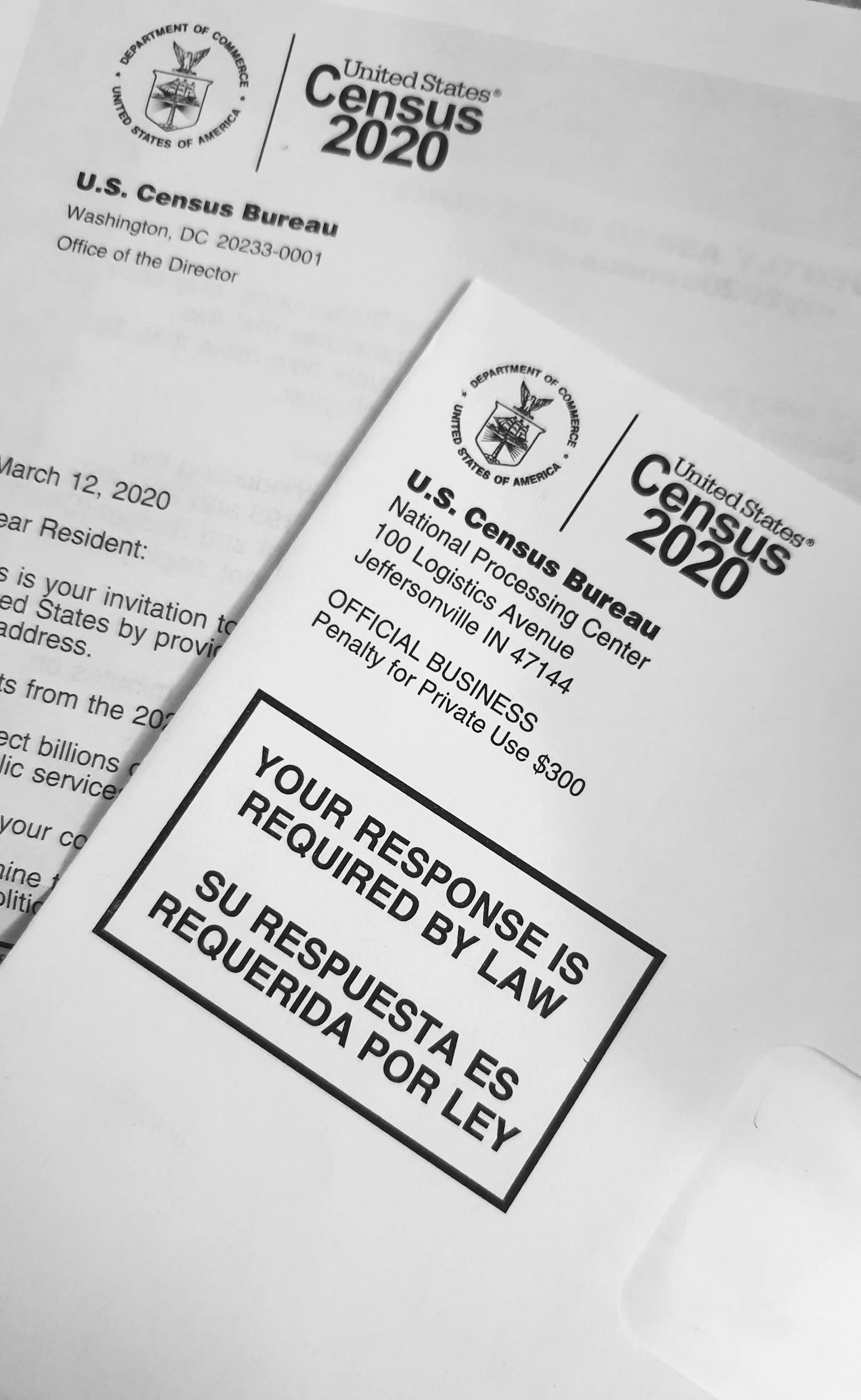
Who Gets Counted? A New Census Rule Could Reshape Congress
If you've been following the mail-in voting fight or Maryland's redistricting battle, this one is the piece that ties them together. Apportionment is the process that decides how many of the 435 seats in the House each state gets, before anyone even starts drawing district lines. Change who gets counted, and you change how much political power a state has for the next ten years, regardless of how any districts inside that state get drawn. Maryland isn't a small player here either, roughly 1 in 6 Maryland residents, about 1.1 million people, are foreign-born.
FIRST: HOW DOES CHANGING WHO'S "COUNTED" CHANGE POLITICAL POWER?
The Constitution fixes the House at 435 seats. Every ten years, the census counts how many people live in each state, and those 435 seats get divided up based on each state's share of the total population. It's a fixed pie, cut into slices based on population.
WHAT HAPPENED
Since the first census in 1790, every count has included everyone living in the country, citizens and noncitizens alike, for the purpose of dividing up House seats. The Constitution's 14th Amendment says apportionment is based on "the whole number of persons in each state," not "citizens."
2019: The Supreme Court blocked President Trump's first-term effort to add a citizenship question to the 2020 census, ruling that the administration's stated reason for wanting it was "contrived."
July 2020: Trump signed a memorandum directing that undocumented immigrants be excluded from that year's apportionment count. The effort never took effect before the 2020 count was finalized.
January 2021: The incoming Biden administration revoked that memorandum on its first day in office.
August 11, 2026: An early draft of a new rule on this same subject leaked to reporters. It was not yet official or public.
September 9-10, 2026: The Census Bureau made its proposal public and published it in the Federal Register. The rule would exclude both undocumented immigrants and legal immigrants without a green card from the population counts used for congressional apportionment starting with the 2030 census. It would also eliminate the census's race, ethnicity, and sexual orientation questions, and could add a citizenship question to the form.
September 17, 2026 (today, still developing): The public comment period is open, closing October 13, 2026.
WHAT SUPPORTERS SAY
The administration argues that the Constitution's "whole number of persons" language was never meant to include people without a lawful, durable connection to the country, saying undocumented immigrants aren't "true inhabitants" with a "usual residence" here in a constitutional sense. They frame the change as restoring "fidelity to the Constitution" and say only people with a genuine, permanent tie to the U.S. should count toward how political power is divided. On the demographic questions, they argue that collecting race and ethnicity data does nothing to serve the census's core job, a headcount for apportionment, and that dropping those questions would protect respondents' privacy and improve response rates.
WHAT CRITICS SAY
Critics point out that every census for over 230 years has counted everyone living in the country, and that the 14th Amendment's actual text says "persons," a word choice they argue was deliberate and specific. They warn this would break with that entire history and shrink both political representation and federal funding, tied to census counts and worth $2.8 trillion a year nationally, for states with larger immigrant populations. Data advocates separately warn that losing race and ethnicity questions would blind public health researchers and civil rights enforcement, block-level race data is exactly what's used to prove discrimination claims in redistricting lawsuits, the same kind of claim that struck down Maryland's own congressional map back in 2022. Critics also note the administration hasn't estimated how many House seats might actually shift under this rule, past research has only modeled excluding undocumented immigrants alone, not this rule's broader group of anyone without a green card.
WHAT WE DON'T KNOW YET
How many House seats would actually shift if this rule takes effect, since the administration hasn't provided an estimate and this rule is broader than anything previously studied. Whether Maryland's own congressional delegation could be affected, given how large a share of its population is foreign-born. What happens after the comment period closes on October 13, legal challenges are widely expected. And whether a future administration reverses this rule again before 2030 actually arrives, the same way Biden reversed Trump's first attempt in 2021.
WHAT YOU CAN DO
- Submit a public comment before October 13, 2026. We built a tool that writes the comment for you (pick detailed or plain language wording, add your name) and links straight to the docket: goodtroublecircle.org/census-comment-tool. The rule is Docket No. USBC-2026-0628. More than 900 comments are already in, yours can be too.
- Share this with others. A 30-day comment window is short, and this affects political power and federal funding for a full decade.
- Check back on this tracker as the comment period closes and legal challenges develop, we'll keep this updated.
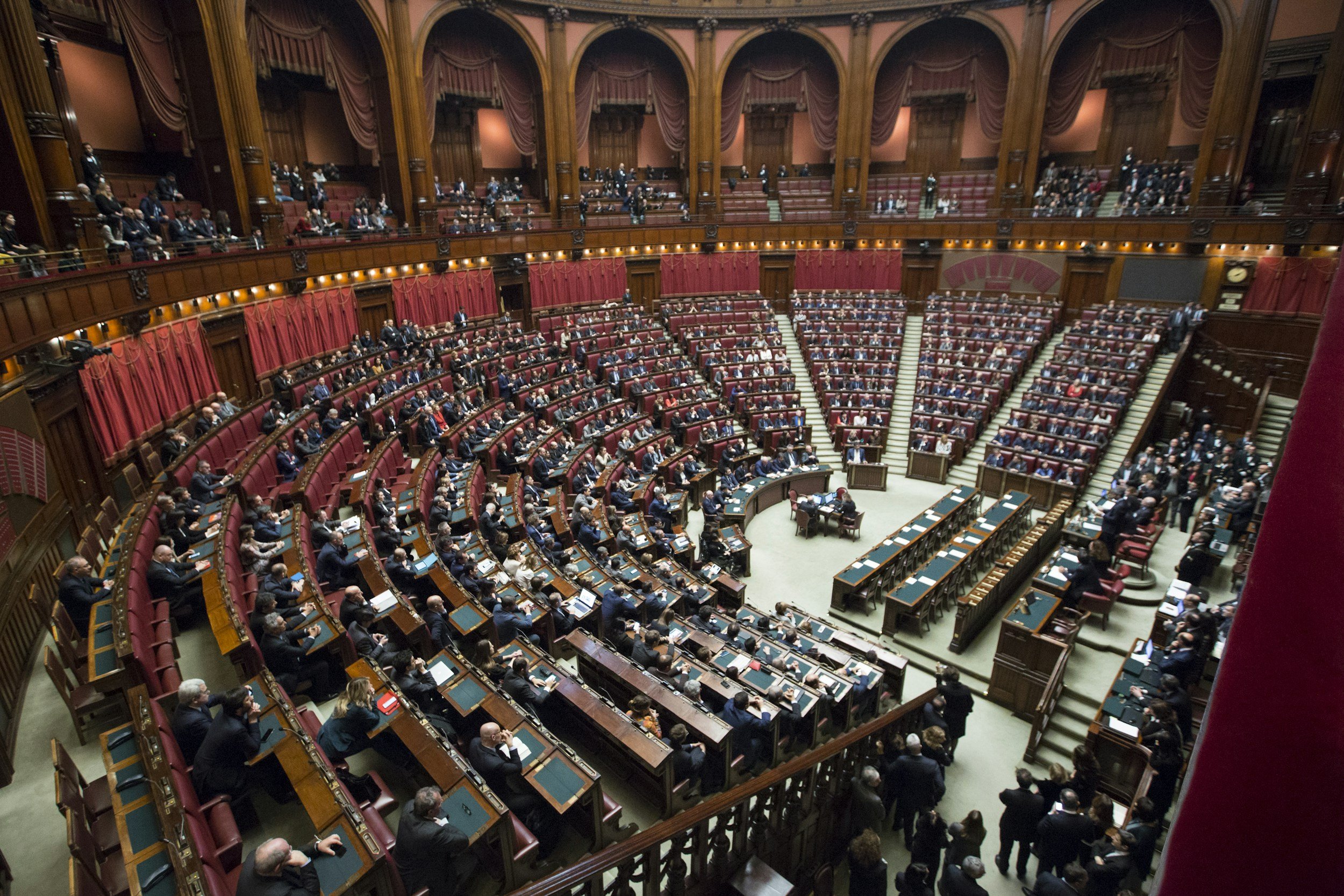
The Second Election Day You Haven't Heard About
You mail your ballot. You watch the results come in. Democrats win enough seats to take back the House. Somewhere, someone hands over the gavel and Congress gets back to work.
But what if the votes are counted, the winners are certified, and Congress still will not let them sit down?
That might sound like a paperwork problem buried deep in the rules of Congress. It is not. It is about whether your vote in November actually counts in January.
FIRST: WHAT DOES IT MEAN TO "SEAT" A MEMBER OF CONGRESS?
Think about starting at a new school. You show up on day one. Your parents signed all the forms. You have your schedule in hand. But before you can sit down in a classroom, someone at the front office has to check your name off the enrollment list. Until that happens, you are just a kid standing in the hallway with a backpack, no matter how right your paperwork is.
Right now, that job belongs to Kevin McCumber, the current Clerk of the House.
WHAT HAPPENED
Here is the timeline so far.
In September 2025, Adelita Grijalva won a special election in Arizona. Speaker Mike Johnson did not swear her in right away. He pointed to a past case involving a different member-elect and to an ongoing government shutdown as his reasons. Arizona's attorney general threatened to sue. Johnson waited more than three weeks before finally seating her once the House returned to work.
In February 2026, Democrats flipped a special election in Houston, shrinking the Republican majority further.
In April 2026, a conservative writer floated the idea that Congress could use voter ID or citizenship rules to deny some states representation.
In September 2026, at a Republican convention in Dallas, Johnson told the crowd, "We cannot and will not allow them to take the majority in the Congress."
Days later, J. Michael Luttig, a retired federal appeals judge appointed by President George H.W. Bush, published an essay called "The Final Battle for America's Democracy." Luttig warned that just before his term as Speaker legally ends at noon on January 3, 2027, Johnson could replace Clerk McCumber with someone loyal to House Republicans. That new Clerk, Luttig warned, could simply leave some certified Democratic winners off the roll.
Not everyone agrees this is likely. Derek Muller, an election law professor who writes for Election Law Blog, pushed back on what he called "fearmongering." He pointed out that the new House is not bound by anything the old House decided. Every new Congress starts fresh.
WHAT THOSE SOUNDING THE ALARM SAY
Luttig argues that today's House Republicans have shown, again and again, that they will put loyalty to President Trump ahead of the country. He points to how long it took courts to act during the 2020 election dispute and warns that a fight over the roll could drag on for weeks or months in court, all while the country has no functioning House. He compares the risk to January 6, 2021, when the country came close to a different kind of crisis before Vice President Mike Pence refused to go along with a plan to overturn the results.
WHAT THE SKEPTICS SAY
Professor Muller and others argue the fear is overblown. The Constitution gives the whole House, not the Speaker alone, the power to judge its own members' elections. A new House starts with a clean slate every two years. No matter what the outgoing Speaker or Clerk tries to do, courts still have the power to step in, and legal experts say they would.
WHAT WE DON'T KNOW YET
There is a lot still unknown, and that is exactly why this is worth watching instead of panicking about.
We don't know if Johnson will actually try to replace Clerk McCumber.
We don't know how close the final House margin will be after the November election. A narrow margin makes a small number of contested seats matter more.
We don't know if any individual races will draw formal legal challenges once results come in.
We don't know how fast courts would act if a challenge like this actually happened.
We don't know whether other Republicans would publicly break from Johnson if he tried this.
WHAT YOU CAN DO
- Check that your voter registration is current, and vote as early as your state allows. Big wins in your district are harder to contest than close ones.
- Watch for two specific things between now and January 2027: any move to replace Clerk Kevin McCumber, and any formal legal challenge filed against a close House race. If you see credible reporting on either, share it.
- Know your own state's Attorney General and Secretary of State. In the Grijalva case, fast public pressure from state officials made a real difference. Save their contact information now.
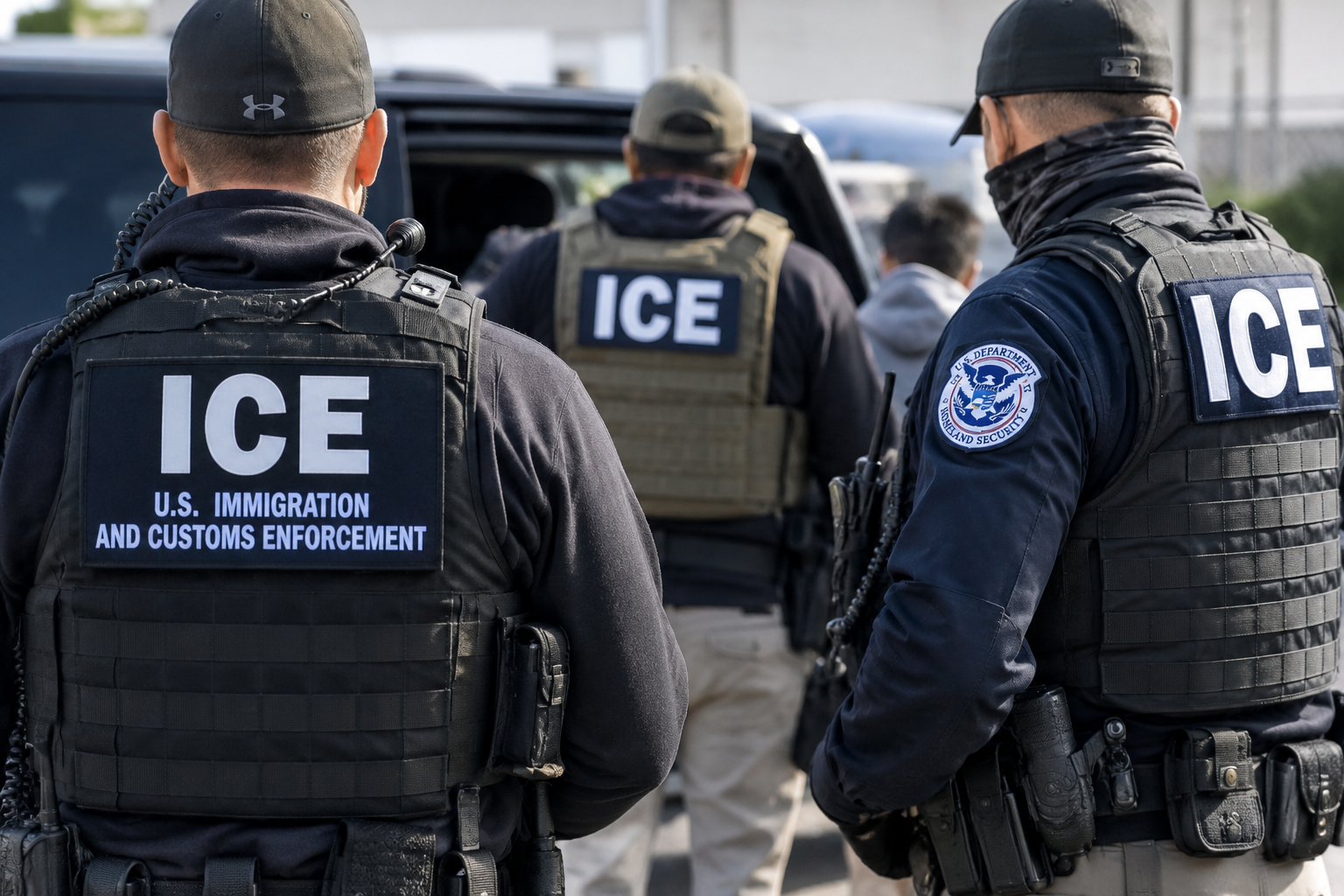
A Knee on His Neck, a Broken Vertebra: ICE Came to Kent Island and Left a Community Reeling
Witnesses say ICE agents broke a young man's neck arresting him on Kent Island. Weeks later, his family still can't find him, and Queen Anne's County is deciding whether to deepen its ties to the same agency.
On the morning of August 21, witnesses on Kent Island watched federal agents pull a 21-year-old man from his car on Main Street in Stevensville, put a knee on his back, and pile on top of him while he called out for help. His brother Kevin, who was there, says he heard something break when an agent's knee came down on his neck. Óscar José Araujo-Mejía, who lives in nearby Queenstown, ended up with two fractured vertebrae and a head wound that took 29 stitches to close. Weeks later, his family says they still don't know exactly where he is being held.
If you heard about this at all, it probably got filed under "ICE arrest, Eastern Shore, isolated incident." It's not isolated and it's not distant. This is what enforcement looks like now on Kent Island, in a county a lot of people still describe as one of the safest places in Maryland to raise a family.
FIRST: WHAT COUNTS AS EXCESSIVE FORCE DURING AN IMMIGRATION ARREST?
Federal agents, like police officers, are allowed to use force to make an arrest, but the law says that force has to be proportional to the actual resistance or danger in front of them, and it has to stop once the person is under control. What isn't allowed, in theory, is continuing to escalate against someone who has already stopped moving.
WHAT HAPPENED
According to Kevin, Araujo-Mejía's brother and an eyewitness, Araujo-Mejía was driving to his job at a McDonald's around 9 a.m. on August 21 when several unmarked ICE vehicles began following him on Route 8 in Stevensville, on Kent Island. As he approached a stoplight, Kevin says he watched one of the trucks ram the passenger side of his brother's Chevy Spark. Maryland State Police say that impact caused Araujo-Mejía's car to run a red light at the intersection of Route 8 and Skipjack Parkway, striking a Toyota Highlander and then a Honda CR-V. Kevin says agents then surrounded the car in front of a Queenstown Bank branch on Main Street in Stevensville. Three agents pulled Araujo-Mejía from the car, "gushing blood all over," Kevin said, put a knee on his back, and then about three more officers jumped on top of him and struck him as he called out for help. "When agents put a knee on his neck I heard something break," Kevin said. Kevin also said he never saw agents present a warrant, and that no one asked Araujo-Mejía for his name before the pursuit began. "They just saw that he was Spanish and started following him," he said.
Araujo-Mejía was left with fractures to his C5 and C7 cervical vertebrae and a head laceration requiring 29 stitches. According to Kevin, ICE agents, not paramedics, drove him to the hospital in an ICE van rather than calling an ambulance. He was taken first to Anne Arundel Medical Center and was later transferred to the University of Maryland's Shock Trauma Center in Baltimore for spinal surgery; as of August 26, the most recent public update, he was listed in fair condition. Sheriff Gary Hofmann's office, which responded to the crash while on routine patrol nearby, says it was not told about the ICE operation in advance and was not involved in the pursuit or arrest itself.
ICE has told a very different story. A spokesperson confirmed agents arrested Araujo-Mejía, who has lived in the country for four years, said he entered the country illegally and had a history of traffic violations, though The Baltimore Banner could not verify any record of prior violations. ICE says what began as a traffic stop became a pursuit only after Araujo-Mejía fled and nearly struck an agent with his car, and the agency's statement labeled him an "illegal alien" from El Salvador while categorically denying that any force was used when agents removed him from the vehicle.
Since the crash, Kevin says he has spoken to his brother only once, briefly, by phone the evening of the crash, and that hospital staff have since cited custody restrictions to keep him from visiting. A Change.org petition organized in the weeks since says that after Araujo-Mejía left the trauma center, community members could no longer locate him in the federal system used to track people in immigration custody, and that his current location and condition remain unconfirmed. The petition is calling on ICE and DHS to disclose what happened during the pursuit and publicly confirm his whereabouts. Governor Moore has said he is "deeply concerned by reports that an individual suffered a broken neck during an ICE arrest."
This isn't an isolated incident, in Maryland or nationally. Days before the crash, DHS said it had quietly carried out one of the largest immigration enforcement operations in agency history across Maryland and Virginia, arresting more than 1,300 people in two weeks without regard to their criminal histories. Nationally, at least 26 people have died in ICE custody in 2026 as of early September, with roughly 52 deaths recorded since January 2025, the highest detention mortality rate in over two decades according to immigration and human rights groups tracking the numbers.
That's the backdrop for why Attorney General Anthony Brown joined 22 other state attorneys general this week in a Tenth Circuit amicus brief defending limits on warrantless ICE arrests, and why four Maryland residents and the advocacy group We Are CASA filed a federal lawsuit the same day, September 9, accusing DHS of a pattern of warrantless arrests that indiscriminately target people perceived to be Black or Brown immigrants. It's also the backdrop for Maryland's Community Trust Act, the state law limiting when local police can cooperate with ICE without a judicial warrant, which the Trump administration is still suing to overturn in federal court.
And it's the backdrop for a decision still being made a few miles from where Araujo-Mejía was arrested. Queen Anne's County Commissioner Chris Corchiarino and Sheriff Hofmann assembled a task force in July to study whether the county should formally partner with ICE through a 287(g) agreement, which would deputize local officers to carry out federal immigration enforcement themselves. The sheriff's office already has a dedicated ICE desk and has made at least one transfer of a detained person to immigration officials. On July 30, an ICE agent gave a briefing on enforcement protocols to the Queen Anne's County Republican Central Committee. The task force's work is ongoing.
WHAT SUPPORTERS OF INDEPENDENT OVERSIGHT SAY
Brown, CASA, and Araujo-Mejía's family and advocates argue that cases like this are exactly why the warrant requirement and independent oversight exist, and why they need to be enforced, not treated as optional. "Congress established specific legal requirements that ICE must meet before making a warrantless arrest, and those requirements are not optional," Brown said of the amicus brief. Advocates point to the rising national death toll in ICE custody, and to cases like Araujo-Mejía's where a person effectively disappears from public tracking systems after an arrest, as evidence that self-policing by the agency isn't working and that outside courts, state attorneys general, and independent investigators need real power to check what happens during and after an arrest.
WHAT ICE AND COUNTY OFFICIALS SAY
ICE's own account of the Araujo-Mejía arrest denies any force was used and places full responsibility on his driving. The Trump administration's Department of Justice argues separately, in its case against the Community Trust Act, that Maryland cannot pass laws obstructing federal immigration enforcement under the Constitution's Supremacy Clause, and that restrictions on sharing immigration status information conflict with existing federal statutes. Queen Anne's County officials weighing a 287(g) agreement describe their goal as full compliance with federal law, not an escalation; Corchiarino and Hofmann have said the county intends to fully comply with federal mandates and that many elements of the program are already effectively in place given the county's existing cooperation with ICE.
WHAT WE DON'T KNOW YET
Araujo-Mejía's current location, medical condition, and legal status have not been publicly confirmed since he was listed in fair condition on August 26. No agency has said whether an investigation into the use of force is happening or planned. The Community Trust Act's fate in federal court is undecided, as is the sheriffs' separate lawsuit against it, the CASA lawsuit's request for an injunction, and the Tenth Circuit case Brown joined. Queen Anne's County hasn't voted on whether to actually sign a 287(g) agreement; the task force is still studying it.
WHAT YOU CAN DO
- Sign and share the Change.org petition calling on ICE and DHS to confirm Araujo-Mejía's whereabouts and open an independent investigation, and share verified reporting rather than secondhand claims as this story develops.
- If you live in Queen Anne's County, watch for the 287(g) task force's public updates and commissioner meetings and show up. This decision is still being made, not finalized.
- Contact your state legislators and the Attorney General's office if you want them to publicly address what happened in Stevensville and press for accountability, not just litigation over the broader legal question.

Maryland's Redistricting Fight Is Headed to Your November Ballot
Maryland's redistricting fight just hit a turning point: the state's highest court kept Question 3 on your ballot but ordered the wording rewritten. We're tracking it in one page.
If you've caught pieces of this story, a special legislative session, a couple of lawsuits, a court fight this week, you're not imagining how fast it's moving. This one also lands closer to home than most redistricting news. Maryland's only Republican member of Congress, Andy Harris, represents the district that includes Queen Anne's County, and Question 3 is the legal groundwork for a specific outcome down the road: it would clear the path for Democratic lawmakers to eventually draw a congressional map that shifts more Democratic voters into Harris's district. That map wouldn't happen for this election. Maryland is sitting out redistricting entirely for 2026, the real fight is about what's allowed starting in 2028.
FIRST: WHAT DOES "COMPACT DISTRICTS" ACTUALLY MEAN, AND WHY IS IT A FIGHT?
Maryland's constitution has long said that legislative districts need to be "compact," basically, a reasonably shaped area, not a long skinny sliver that snakes across the map to scoop up favorable voters. In 2022, a judge ruled that this same compactness rule also applied to Maryland's congressional districts, not just state legislative ones, and struck down the state's congressional map as an extreme partisan gerrymander.
WHAT THE AMENDMENT ACTUALLY DOES (AND DOESN'T DO)
Two parts of Question 3 get misunderstood a lot, worth clearing up plainly.
It doesn't rewrite the Declaration of Rights, it makes it not apply here. The amendment adds a line to the constitution saying nothing in the Maryland Constitution, including the Declaration of Rights, sets any standard for congressional map boundaries. Right now, someone could challenge a congressional map in court by arguing it was drawn to disadvantage a religious or political group. If Question 3 passes, that kind of challenge would no longer be available for congressional maps, only for state legislative ones.
It doesn't give the Supreme Court final say over maps. The amendment lets the legislature, if it chooses to pass a separate law later, allow challenges to a congressional map to go straight to the Maryland Supreme Court instead of starting in a lower court. That changes where a lawsuit gets heard first, not who draws the maps or whether the Court has to approve them. The General Assembly still draws the maps, same as always.
WHAT HAPPENED
2022: A Maryland judge ruled that the state constitution's compact-district requirement applies to congressional maps, not just state legislative ones, and struck down the state's congressional map as an extreme partisan gerrymander.
Summer 2025: A nationwide redistricting fight kicked off after President Trump pushed Texas Republicans to redraw their congressional map mid-decade for more GOP seats, and other states in both parties began considering the same move.
April 2026: An early push by some Maryland Democrats to redraw the state's own congressional map before this year's election ran out of time and did not happen.
May 2026: Following a Virginia Supreme Court ruling on that state's own redistricting attempt, Maryland's Senate President signaled he was open to revisiting redistricting, and a state senator called for an emergency special session.
July 2026: State leaders announced plans for an August special session focused on setting up redistricting rules for maps drawn after 2028, not the current midterms.
August 2026: The Maryland General Assembly held that special session and passed a constitutional amendment, this year's ballot Question 3, that would remove the compact-district requirement from congressional maps while keeping it for state legislative maps. No Republican lawmakers voted for it. Maryland Republicans then filed two lawsuits, one in Annapolis and one in Dorchester County, arguing the amendment missed a legal deadline and that the ballot language was unclear. Two lower courts sided with Republicans and blocked the question from the ballot.
September 3, 2026: In a divided ruling, the Maryland Supreme Court reversed most of those lower court decisions. Chief Justice Matthew Fader wrote the majority opinion, which rejected the Republican plaintiffs' arguments that lawmakers missed a legal deadline and that the amendment improperly mixed more than one subject. The court agreed with the challengers on one point, that part of the ballot language was misleading and violated due process, and ordered it replaced with the wording lawmakers themselves had used to describe the amendment's purpose. The case is Howell v. Maryland State Board of Elections. Justice Steven Gould dissented, joined by Senior Justice Glenn Harrell, arguing the court had no authority to rewrite the ballot question itself and that even the corrected language fails to tell voters the amendment would remove the Maryland Declaration of Rights as a standard for judging congressional maps. Republican Senate Minority Leader Steve Hershey, whose district covers Queen Anne's County, was a plaintiff in the Anne Arundel County challenge.
September 4, 2026: The court's order specified the new ballot wording. Circuit courts in Anne Arundel and Dorchester counties were ordered to formalize new orders that same day, after which the State Board of Elections, which had already certified the ballot with the old wording earlier in the week, must swap in the new language. The Supreme Court said a full written opinion explaining its reasoning will follow at a later date.
September 5, 2026: No appeal has been filed. Hershey criticized the ruling as sidestepping the core legal question rather than deciding it, and the Maryland Freedom Caucus, one of the plaintiff groups, said it's weighing next steps with its legal team, but neither has announced any further legal action. Since the Maryland Supreme Court is the final interpreter of the state's own constitution, there isn't an obvious higher court left to appeal to on this particular question.
September 6, 2026: State Elections Administrator Jared DeMarinis confirmed that election officials are on track to meet every deadline, with the court-ordered Question 3 language already incorporated into the ballot-printing process. Mail-in ballots for the general election were scheduled to begin going out to voters on September 19.
September 18, 2026: Governor Moore said he expects voters to approve Question 3 "overwhelmingly." Senate President Bill Ferguson, asked what happens next if it passes, declined to commit to a timeline for an actual new congressional map, saying lawmakers are "focused on one step at a time" and would reassess after the November election. He did not rule out pursuing a new map eventually, but said any path forward would need "a negotiated settlement."
September 19, 2026: Mail-in ballots carrying the court-ordered Question 3 language began going out to voters, on schedule.
September 22, 2026 (today, still developing): Protect Maryland Votes, a group opposing the amendment, released a bipartisan poll (Ragnar Research Partners and Lincoln Park Strategies, 600 likely voters, September 10-13, margin of error plus or minus 4 points) finding 41% of respondents opposed Question 3 after hearing the actual ballot language, 28% in support, and 30% undecided.
WHAT SUPPORTERS SAY
Backers, including the group Fight Back MD, describe this as a defensive move rather than an aggressive one, a response to a redistricting push that started with Republican-led states like Texas. They argue giving state lawmakers freedom to redraw congressional lines after 2028 protects Maryland's ability to compete on a level playing field against states doing the same thing for the other party. Governor Wes Moore called the ruling a massive victory and said it keeps the power to decide with voters, and he plans to campaign for a yes vote himself, saying on September 18 that he expects an "overwhelming" yes. Senate President Bill Ferguson and House Speaker Joseline Pena-Melnyk called it a win for the General Assembly's authority to put questions before voters and said the decision now belongs to the people. Ferguson has also pointed to Virginia as a reason for Maryland's slower, one-step-at-a-time approach: Virginia's own voter-approved redistricting amendment was struck down earlier this year after a court found its ballot process hadn't followed proper procedure, the same kind of problem Question 3 was specifically written to avoid.
WHAT CRITICS SAY
Republicans and some good-government advocates argue the process itself was rushed through a special session with zero GOP support, and that removing compactness standards opens the door to more aggressive gerrymandering regardless of which party benefits later. On the Eastern Shore specifically, this is being watched closely because Andy Harris, Maryland's only Republican member of Congress, chairs the national House Freedom Caucus and represents the district that includes Queen Anne's County. A future map, if lawmakers choose to draw one after 2028, could shift Democratic voters into that district and reshape or eliminate the seat entirely. Senate Minority Leader Steve Hershey, whose district covers Queen Anne's County, argues the court sidestepped the core legal question by rewriting the ballot language instead of ruling on whether the amendment was valid in the first place. The Maryland Freedom Caucus, one of the plaintiff groups, says the court's fix still doesn't tell voters the amendment would remove the Declaration of Rights as a standard for judging congressional maps. The group Protect Maryland Votes, which commissioned the September 22 poll showing opposition ahead of support, argues the amendment strips away "over 50 years of constitutional protections" and that voters reject it once they understand what it actually does.
WHAT WE DON'T KNOW YET
What the Supreme Court's full written opinion will say when it's filed, since only the order and the new wording are out so far, not the full reasoning behind them. Whether the Maryland Freedom Caucus's legal team finds any other avenue to challenge the amendment before November, even though no appeal has been filed and the Maryland Supreme Court is the final word on the state constitutional question itself. Whether Governor Moore's confidence or the September 22 poll's numbers hold up closer to Election Day, with three in ten surveyed voters still undecided. If voters approve Question 3, what an actual new congressional map would look like or when lawmakers would take it up, since Senate President Ferguson has said that decision waits until after November and would require a "negotiated settlement." Whether Queen Anne's County and the rest of the Eastern Shore would stay together in Andy Harris's current district or get split into new lines down the road.
WHAT YOU CAN DO
- Look for Question 3 on your ballot. Mail-in ballots began going out September 19. It does not redraw any district lines right now, it changes the rule for maps drawn later.
- Check back on this tracker for the Supreme Court's full written opinion once it's filed, and for how the race tightens as more polling comes in, we'll add it here as soon as it's out.
- Share this tracker with neighbors in Andy Harris's district, since a future Eastern Shore map is part of what's ultimately at stake.

The Fight Over Your Mail-In Ballot Isn't Over Yet
A court fight happening right now could change how you vote by mail this fall.
If you vote by mail in Maryland, you've probably caught pieces of this story. Court hearings. An executive order. Lawsuits from more than a dozen states. It's a lot, and it's changing by the day. Nationally, roughly 3 in 10 voters cast their ballot by mail in 2024, and Democratic voters use it at nearly double the rate Republican voters do, which is part of why this fight has become so partisan.
That might sound like a Washington story that has nothing to do with the Eastern Shore. It's not. It's about whether the mail-in ballot you request this fall works the same way it has in every election you've voted in before.
FIRST: WHO ACTUALLY GETS TO DECIDE HOW YOU VOTE BY MAIL?
The Constitution gives states the main job of running their own elections. Congress can set a few rules for federal races, but the day-to-day work, things like ballot design, verifying voters, and setting deadlines, belongs to state and local election officials.
WHAT HAPPENED
March 31, 2026: President Trump signed an executive order aimed at restricting mail-in voting nationwide. It directs the Department of Homeland Security to build a national voter eligibility list and tells the U.S. Postal Service to only process mail ballots tied to that list.
May 2026: A printing vendor mistake caused some Maryland primary voters to receive a mail ballot for the wrong political party. State election officials mailed every affected voter a corrected replacement ballot. President Trump seized on the error, calling the ballots "illegal" and asking the Justice Department to investigate. Maryland's state election administrator, Jared DeMarinis, publicly disputed the claim and confirmed no fraudulent ballots were sent, only a vendor printing mix-up.
Spring and summer 2026: More than a dozen states and voting rights groups sued over the executive order, arguing it oversteps federal authority and puts election administration in the wrong hands. A federal judge in Boston, Indira Talwani, sided with them and blocked the rule while the case continued.
Around August 28, 2026: The Supreme Court's conservative majority, in a 6-3 ruling, lifted Judge Talwani's earlier injunction on procedural grounds, finding the case had been filed before the administration's plans were concrete enough to challenge. That let the administration move forward for the moment, but Judge Talwani then issued a new 14-day order blocking enforcement again while she considered a longer-term ruling.
September 1, 2026: A whistleblower statement from an anonymous federal official, released by U.S. Senator Richard Blumenthal, alleged that the Postal Service was rushing to build a new ballot-verification system in a way that risked disrupting mail ballot delivery during the election.
September 3, 2026: The administration asked a federal appeals court to set aside Judge Talwani's order, that request was still pending, and separately asked the Supreme Court to intervene and lift it.
September 4, 2026: Judge Talwani issued a preliminary injunction, a stronger and longer-term ruling than her earlier order, again blocking the Postal Service rule. She found it likely unlawful and unconstitutional, noted the record had no evidence of the kind of mail-voting fraud the rule claims to address, and wrote that the rushed timeline made disenfranchisement "practically inevitable" for voters. The ruling came as the first state in the country began mailing ballots for November, which made the earlier Supreme Court request moot.
September 6, 2026 (this week, still developing): The administration formally withdrew its September 3 petition and filed a new one, its third trip to the Supreme Court in this fight, asking the Court to override Judge Talwani's September 4 injunction specifically. Solicitor General D. John Sauer argued states would "retain full control over who is permitted to vote" and that the rule "simply imposes reasonable preparation requirements," while warning of serious harm if the injunction stays in place. The administration also asked Justice Ketanji Brown Jackson, who handles emergency requests from this circuit, to pause the injunction immediately while the full Court prepares to rule, which isn't expected until after her Wednesday, September 9 deadline for the challengers to respond. North Carolina has already begun mailing ballots, and Alabama is scheduled to start September 9, with several more states following the week after.
September 10, 2026 (this week, still developing): The First Circuit Court of Appeals unanimously rejected the administration's separate request to lift the September 4 injunction while that appeal proceeds. The three-judge panel found the administration hadn't shown the rule would avoid "chaos and widespread voter disenfranchisement" this close to the election, pointing to specific problems like states being unable to reprint compliant ballot envelopes in time and likely delays in USPS's own envelope-review process. The panel also rejected the argument that the rule is just a "modest" regulation, saying that framing missed the real question of whether the executive branch has this authority at all. The injunction remains in place. The Supreme Court's separate, pending request has not yet been decided.
September 13-14, 2026 (this week, still developing): A second federal judge, Carl Nichols in Washington, D.C., issued his own preliminary injunction blocking the rule, this one broader than Talwani's. His case was brought separately, by the Democratic Senatorial Campaign Committee, LULAC, and the NAACP. Where Talwani ruled on constitutional grounds, Nichols ruled on statutory grounds, finding no law gives USPS the power to run the voter-data portal or refuse to deliver noncompliant ballots, even though he agreed USPS might have authority over envelope design alone. Because those pieces are too intertwined to separate, he blocked the whole rule rather than just parts of it. Like Talwani, he found no evidence of the fraud risk the rule claims to prevent. Solicitor General Sauer has told the Supreme Court that Nichols "offered no materially new reasoning" and is asking the Court's ruling on Talwani's case to cover Nichols' too. In the meantime, USPS's own rollout has hit real friction: it initially rejected an envelope design from Florida's Leon County because text sat 0.014 inches too close to other text.
September 14, 2026: The Supreme Court denied the administration's request to lift Talwani's September 4 injunction. In an unsigned order, the Court found the government "unlikely to succeed on the merits" of its challenge and that the equitable factors did not favor a stay. Justice Alito dissented, joined by Justice Thomas, arguing the states and lower courts bear the blame for the rule's late timing because earlier litigation delayed USPS from finalizing it sooner. Justice Kavanaugh wrote separately, agreeing the rule can't apply to this election but saying he believes USPS likely does have the underlying legal authority to issue it, just not enough runway left for state and local officials to implement it fairly. With this ruling, both Talwani's and Nichols' injunctions remain in effect, and the rule stays blocked through the November 3 election.
WHAT SUPPORTERS OF THE ORDER SAY
The administration and the Justice Department argue that mail voting needs stronger safeguards to confirm that everyone casting a ballot is a verified, eligible citizen, and that tying ballot delivery to a confirmed voter list will reduce errors and fraud risk. They point to incidents like Maryland's printing mistake as evidence that mail systems need closer federal oversight. Legally, they argue the rule only imposes modest envelope design and addressee information requirements, and that the Postal Service already has this kind of regulatory authority, comparing it to existing USPS rules for things like mailing cremated remains or replica explosives. They warn that leaving the injunction in place risks real harm if states relied on it and didn't prepare to comply. In his Supreme Court dissent, Justice Alito made a related point: that the states and courts, not the administration, are responsible for the rule's late timing, since earlier rounds of litigation delayed USPS from finalizing the rule sooner.
WHAT CRITICS SAY
More than a dozen state governments, election officials, and voting rights groups, including the League of Women Voters in a related case, argue that running elections is a state responsibility, that changing the rules two months before Election Day creates confusion for both voters and local officials, and that there's no evidence of the kind of widespread fraud the order is meant to stop. They also warn that new hurdles would fall hardest on older voters and rural voters, who rely on mail ballots more than most. Maryland officials have said publicly that no fraudulent or illegal ballots were ever sent in the state, only a vendor error that was corrected. Legally, they argue the Constitution's Elections Clause puts authority over congressional elections with state legislatures and Congress, not the Postal Service. A whistleblower account released by a U.S. senator also alleged the Postal Service was rushing to build the new verification system in a way that could disrupt ballot delivery. After the First Circuit's ruling, the League of Women Voters of Massachusetts and its co-plaintiffs said the decision "rightly keeps in place an order blocking USPS from enforcing its disruptive and disenfranchising rule," and argued the Postal Service "is not the gatekeeper for mail ballots" and "cannot usurp election authority from the states and Congress."
WHAT WE DON'T KNOW YET
Whether the administration tries to separately challenge Nichols' injunction at the Supreme Court now that Talwani's has been left in place, or lets that one play out in the D.C. Circuit first. Whether Talwani's and Nichols' underlying cases, the ones deciding whether the rule is lawful at all rather than just whether it can apply to this election, continue toward a final ruling after November. Whether any of this changes how Maryland's mail-in ballot process works for the November 3 general election. And what a "verified eligibility list" would actually mean in practice for a state like Maryland.
KEY DATES AND LOCATIONS FOR QUEEN ANNE'S COUNTY
Whatever this legal fight decides, here's your backup plan: ways to vote that don't depend on a single trip through the mail.
Kent Island Fire Department, 1610 Main St, Chester, MD 21619
Vincit Street Building, 110 Vincit St, Centreville, MD 21617
GO MART, 741 Main Street, Church Hill, MD 21623
Kent Island Fire Department, 1610 Main St, Chester, MD 21619
Queen Anne's Office Building, Conference Room, 110 Vincit St, Centreville, MD 21617
Still mailing your ballot back? Request it by October 27, 2026, or October 30 for a Print-at-Home ballot, and mail it back the same day you fill it out. Voter registration closes October 13, 2026. Election Day is November 3, 2026, 7am to 8pm, at your assigned polling place.
Drop box locations above are confirmed for Queen Anne's County's primary election. They're expected to stay the same for November, and we'll update this note if the county changes them.
WHAT YOU CAN DO
- Confirm your Maryland voter registration, then vote early or use a drop box with the dates and locations above instead of waiting on the mail.
- Check back on this tracker for the next update instead of waiting on a new post, this page will keep growing as the story does.
- Share this tracker with a neighbor or family member who votes by mail so a late rule change doesn't catch them off guard.
USPS Built a Ballot-Screening System While Courts Told It Not To
Imagine your local election office does everything right. It processes your mail ballot request, gets your ballot ready, and takes it to the post office to mail to your house. Then the post office says it needs to check a federal list first.
That is basically what is happening right now with a new U.S. Postal Service rule, and a whistleblower says the system built to run it was thrown together so fast it might not even work. That might sound like a technical mailing dispute between two government agencies. It's not. It's about whether your ballot gets to your mailbox on time this November.
A whistleblower says the system is rushed and untested, and a court hearing this week could decide whether it gets used for the November election.
Imagine your local election office does everything right. It processes your mail ballot request, gets your ballot ready, and takes it to the post office to mail to your house. Then the post office says it needs to check a federal list first.
That is basically what is happening right now with a new U.S. Postal Service rule, and a whistleblower says the system built to run it was thrown together so fast it might not even work. That might sound like a technical mailing dispute between two government agencies. It's not. It's about whether your ballot gets to your mailbox on time this November.
FIRST: WHOSE JOB IS IT TO DECIDE WHO GETS A BALLOT?
Normally, if your county board of elections mails you a ballot, the Postal Service's job is simple: get it to your mailbox, no questions asked, the same way it delivers your birthday cards and your electric bill. It does not decide who is and is not allowed to receive mail. That decision belongs to your state and county election office. This new rule hands the Postal Service a different job. Before it will agree to deliver a ballot at all, it wants your election office to submit your name, address, and ballot barcode into a new federal online system for approval.
WHAT HAPPENED
On March 31, 2026, President Trump signed Executive Order 14399, "Ensuring Citizenship Verification and Integrity in Federal Elections." It directed USPS to write new rules for mail ballots, including barcode and ID standards the order says will help confirm that only citizens receive and cast ballots.
In June, Postmaster General David Steiner told senators the goal was making sure the right ballots go to the right people.
Voting rights groups sued in federal court in Massachusetts. In August, Judge Indira Talwani blocked the plan, ruling it was likely unconstitutional and would create chaos and confusion for states this close to the midterms.
On August 24, the Supreme Court paused that block on a technicality, ruling the challenge had come too early since USPS had not yet published a final rule.
USPS moved fast. On August 26, it issued its final rule, called "Ballot Mail for Federal Elections." It requires every mail ballot to carry an official Election Mail marking and a unique tracking barcode, and it requires election offices to upload each voter's name, address, and ballot barcode into a new USPS online system, called the Federal Ballot Mail Portal, before USPS will accept the ballots for mailing.
That same day, a coalition of 24 Democratic state attorneys general, including Maryland's, along with Pennsylvania, sued again. Voting rights groups filed a new complaint too.
On August 28, Judge Talwani issued a fresh 14 day order blocking USPS from enforcing the rule for this fall's election while she considers a longer block. The administration is asking a federal appeals court to lift that order early, and a hearing on whether to extend it is set for Thursday, September 3.
Then, on September 1, a USPS whistleblower, represented by the nonprofit Whistleblower Aid, sent a formal disclosure to Senator Richard Blumenthal's office. It alleges USPS built the Federal Ballot Mail Portal in a matter of weeks, far faster than the nine months to a year normally needed for a system this complex, and that it was not adequately tested. It warns that one bad barcode inside a large batch of ballots, like the more than two million Maricopa County, Arizona typically mails at once, could delay or block the entire batch. Reporting since then from NPR, the New York Times, and Axios confirms USPS kept building the system through the legal fight, apparently so it is ready to switch on quickly if the courts clear the way before November 3.
WHAT SUPPORTERS OF THE RULE SAY
USPS and the Trump administration say this is about basic election security. USPS argues the rule will improve ballot tracking, help law enforcement, and reduce the risk of fraud, while leaving actual voter eligibility decisions to state election officials rather than USPS itself. White House spokesperson Lauren Bis has defended the rule as part of ensuring safe, transparent, and honest elections, and says building barcode tracking software is not new territory for USPS since it already handles this kind of system for other large bulk mail customers. A coalition of Republican state attorneys general, led by Alabama, told USPS during the public comment period that the rule addresses real vulnerabilities in mail voting and gives states useful oversight tools without taking away their authority.
WHAT THE LAWSUITS SAY
Judge Talwani, in blocking the rule, found that USPS had not presented evidence of the fraud problem it says it is solving, and that the rule creates a real risk of disenfranchising voters this close to the election. The coalition of 24 Democratic attorneys general, including Maryland's, argues the rule illegally hands USPS, an agency Congress created, power the Constitution reserves to the states: deciding how elections are run. Senator Blumenthal, citing the whistleblower disclosure, says the rollout is not just legally shaky, it is also unreliable, built too fast to work for a live national election. Election administrators warn that even if the rule survives in court, most counties do not have the staff or time to comply before ballots start going out, pointing to the sheer size of counties like Maricopa as proof the timeline does not work.
WHAT WE DON'T KNOW YET
We do not know whether Judge Talwani will extend Thursday's hearing into a longer block that lasts through November 3, or whether the appeals court steps in first. We do not know if the Supreme Court will take up another emergency request, as it already has once this cycle. We do not know whether the Federal Ballot Mail Portal actually works reliably at scale. That is the entire point of the whistleblower complaint, and nobody outside USPS has confirmed otherwise. And we do not yet know what any of this means for Maryland and Eastern Shore mail voters specifically if the rule takes effect with only weeks of runway before ballots go out.
WHAT YOU CAN DO
- If you vote by mail in Maryland, request your ballot as early as your county allows. Mail voting is proceeding under existing rules right now, but the more runway you and your county have, the better protected you are if anything changes.
- Check the Maryland State Board of Elections site or your county board of elections directly for updates, rather than relying on rumors. This situation is moving fast and details will keep changing as the courts rule.
- Watch for news out of Thursday's hearing, and share verified updates, not speculation, with friends and neighbors who vote by mail, especially seniors and voters with disabilities who depend on it most.
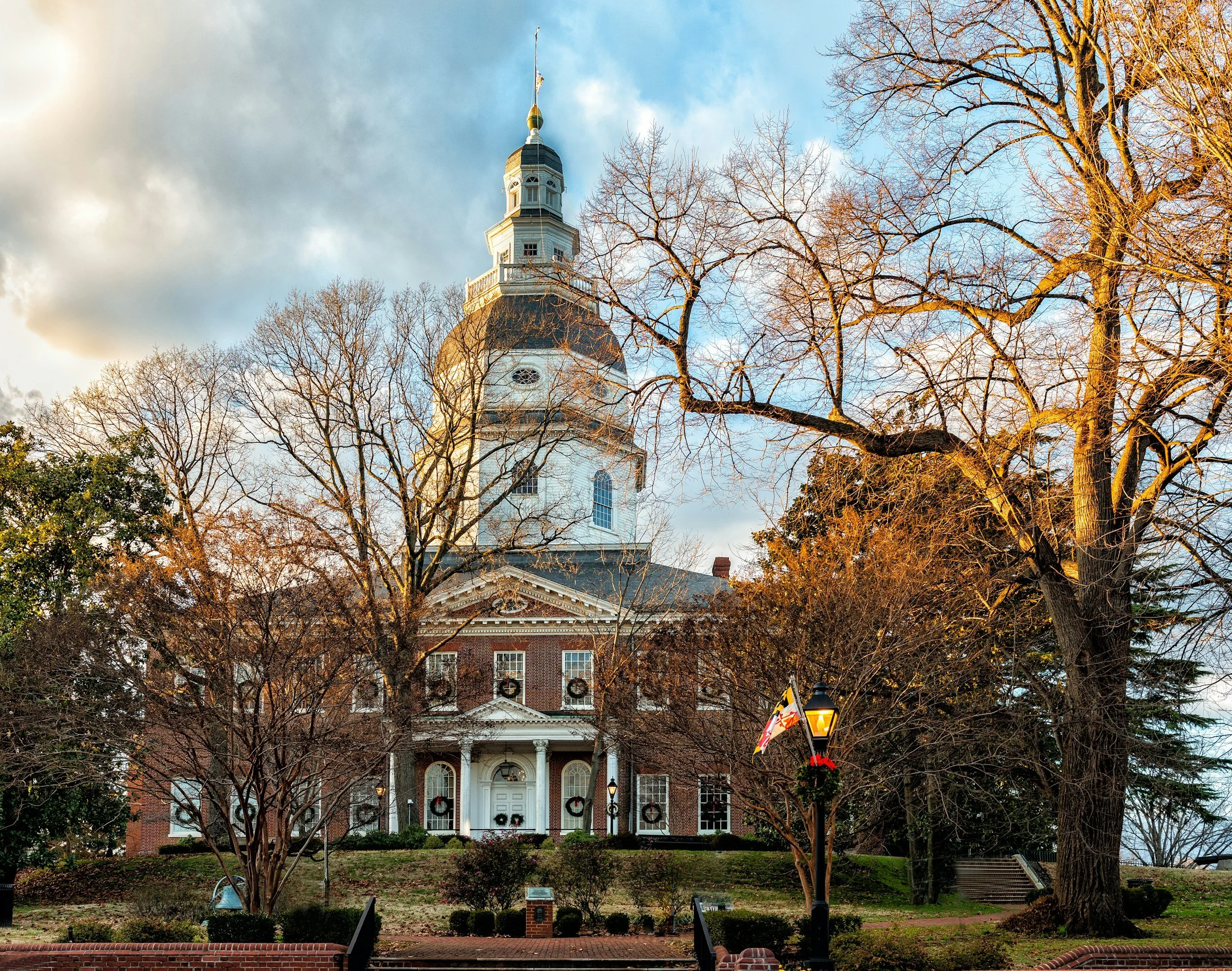
Maryland's Supreme Court Has One Day to Decide If Your Ballot Question Survives
Maryland's Supreme Court rules Thursday on whether the Eastern Shore's congressional seat gets redrawn.
Two judges say lawmakers broke the rules trying to redraw the Eastern Shore's congressional seat. Thursday, the state's highest court rules, hours before ballots go to the printer.
Here's a sentence you don't read every day: on Thursday morning, seven judges in Annapolis will help decide whether roughly 1,200 versions of Maryland's November ballot get printed with an extra question on them, or without one.
That might sound like a scheduling problem for the State Board of Elections. It's not. It's about whether Maryland voters get a say this fall on redrawing the congressional district that covers Queen Anne's County and the rest of the Eastern Shore, the only one in the state currently held by a Republican.
FIRST: WHY CAN'T LAWMAKERS JUST REDRAW THE MAP THEMSELVES?
Maryland's constitution already spells out rules for how legislative and congressional districts have to be drawn: compact, connected, and respectful of county and city lines. Courts have read those same rules to cover congressional maps too. That's part of why a federal court threw out Maryland's last congressional map back in 2022.
So if the General Assembly wants a different, looser rulebook for congressional maps only, a regular bill won't do it. Those standards are written into the constitution itself, and only Maryland voters can change the constitution. That's what Question 3 is. It isn't a new map. It's a change to the rulebook that decides what future maps are allowed to look like.
WHAT HAPPENED
In January 2026, Gov. Wes Moore's redistricting advisory commission recommended a new congressional map concept designed to give Democrats a shot at winning all eight of Maryland's U.S. House seats, up from seven. Moore, House Democrats, and national party leaders spent months pushing Senate President Bill Ferguson to get on board.
On Aug. 3 to 5, the General Assembly met in a special session in Annapolis. After roughly eight hours of House debate and three more in the Senate, lawmakers passed HB 2100, a constitutional amendment, with only Democratic votes. Gov. Moore signed it, sending it to voters as Question 3 on the November ballot.
If approved, Question 3 would state that the constitution's compactness and boundary-respecting standards apply only to state legislative districts, not congressional ones, freeing the legislature to draw a new congressional map before the 2028 elections without those constraints. It would also give the Maryland Supreme Court original jurisdiction over future lawsuits challenging congressional maps.
The target is no secret. The map floated by Moore's commission would stretch the Eastern Shore-based 1st District west across the Chesapeake Bay to pick up Democratic-leaning parts of Anne Arundel and Howard counties, connecting Ocean City to Columbia, while cutting out Republican-leaning Harford County. The 1st District is currently held by Rep. Andy Harris, the only Republican in Maryland's congressional delegation.
Two separate lawsuits followed almost immediately. In Anne Arundel County, Circuit Judge Robert J. Thompson ruled the General Assembly hadn't complied with state election law when it passed HB 2100, and found the ballot question's language, which describes the change as merely "clarifying" the constitution, intentionally misleading. He also found the amendment improperly bundles two different subjects, the redistricting rule change and the grant of original jurisdiction to the Supreme Court, into a single ballot question. In Dorchester County, Circuit Judge S. James Sarbanes reached a similar conclusion in a second case. Both rulings blocked Question 3 from appearing on the November ballot.
The state appealed both rulings. The Maryland Supreme Court has scheduled oral arguments for 9 a.m. Thursday, Sept. 3, the same day the State Board of Elections is set to send ballots to the printer at the end of the day. Election officials expect a ruling before then.
WHAT SUPPORTERS OF QUESTION 3 SAY
Democratic legislative leaders and the Moore administration argue the amendment gives lawmakers clearer constitutional guidance for future congressional mapmaking, separate from the standards written for state legislative districts. They frame the special session as a response to mid-decade congressional maps already redrawn in Texas, Missouri, and North Carolina at the urging of the Trump administration, maps that added Republican-favorable seats outside the normal redistricting calendar. In their telling, if other states can rewrite their maps mid-decade to gain seats, Maryland voters should get to decide whether their state can do the same.
WHAT THE LAWSUITS SAY
The Republican lawmakers and voters who brought the two cases argue Question 3 is a transparent attempt to gerrymander one House seat, Harris's, under the guise of a technical constitutional cleanup. They point to the "clarifies" language in the ballot question as misleading voters about what is, in substance, a rule change with real consequences. They also argue the amendment violates the constitution's single-subject rule for ballot questions by combining the redistricting standard change with an unrelated grant of jurisdiction to the state's highest court, and that the two-day special session didn't give the public the legally required notice before the vote.
WHAT WE DON'T KNOW YET
Whether the Supreme Court sides with the two circuit judges or the state, and whether that ruling comes in time to actually change what gets printed. If Question 3 is kept off the ballot, it's unclear whether legislative leaders would try again through a different process before 2028, or drop it for this cycle. And even if voters do get to weigh in and approve it in November, the actual new congressional map, and exactly how much of the Eastern Shore ends up in a different district, still hasn't been drawn.
WHAT YOU CAN DO
- Watch Thursday's oral arguments live at courts.state.md.us/scm/webcasts starting at 9 a.m., and follow local coverage for the ruling later that day.
- Read HB 2100's actual text for yourself rather than relying on either side's summary of it, so you know exactly what you'd be voting on if Question 3 survives.
- Confirm your voter registration is current at the Maryland State Board of Elections site well before November, since this case is a reminder that ballot fights can move fast and close to Election Day.
Read HB 2100's full text at the source, not just our summary of it.
Read the Bill Text →
Who's Watching Charter Schools? The Federal Civil Rights Shakeup, Explained
As Washington moves civil rights enforcement out of the Department of Education, who actually checks on a new school like QACCS just got more complicated. We break down what changed, and why it matters locally.
As Washington moves civil rights enforcement out of the Department of Education, the question of who actually checks on a new school like QACCS just got more complicated.
Two issues back, we looked at what a classical charter school would mean for Queen Anne's County. Last issue, we zoomed out to the national argument over these schools. This time we're looking at something less visible but just as important: who actually watches a new public school once it opens, and what changed in Washington this summer that affects the answer.
FIRST: WHAT DOES "CIVIL RIGHTS OVERSIGHT" IN SCHOOLS EVEN MEAN?
Every public school that takes federal funding, including every charter school, is bound by federal civil rights law. Two different offices historically handled this. The Office for Civil Rights (OCR) investigates complaints about discrimination based on race, sex, disability, or national origin, think of it as a complaints hotline: a parent or student who believes they were treated unfairly can file a complaint, and OCR is legally required to look into it. Separately, the Office of Special Education and Rehabilitative Services (OSERS) oversees the Individuals with Disabilities Education Act (IDEA), the law that governs special education services specifically, more like a standing technical inspector checking that required services are actually being delivered, not just responding to complaints.
WHAT HAPPENED NATIONALLY
On June 16, 2026, the Department of Education announced it was moving both of these functions out of the agency, part of the Trump administration's ongoing effort to close the department entirely, something that would ultimately require an act of Congress that hasn't happened yet. OSERS, which oversees IDEA, is moving to the Department of Health and Human Services. OCR's civil rights investigation and enforcement work is moving to the Department of Justice's Civil Rights Division under a new interagency agreement.
WHY THIS TIES BACK TO QACCS SPECIFICALLY
When QACPS's Board of Education denied QACCS's charter application in September 2025, one of the specific reasons cited was underdeveloped plans for serving students with disabilities and English learners. That's not a coincidence to bring up here. If QACCS resubmits and eventually opens, any future concerns about how it serves those exact student groups would run through this newly reorganized system: special education compliance now overseen by HHS instead of the Education Department, and discrimination complaints now evaluated jointly with the Justice Department instead of handled solely in-house at OCR.
This matters more for a brand-new school than an established one. QACPS's 14 existing schools have years of compliance history, established staff, and a track record regulators and families can point to. A new charter, by definition, doesn't have that yet, which is exactly why the review committee flagged the disability and English learner plans as underdeveloped in the first place. Whatever oversight system exists at the moment a new school opens matters more when there isn't already a track record to fall back on.
WHAT SUPPORTERS OF THE CHANGE SAY
Department officials say the administration will continue to "vigorously enforce" education civil rights laws and that moving the offices doesn't change the government's underlying legal obligations, only which agency carries them out. Education Secretary Linda McMahon has framed these moves as test cases supporting her broader argument that these programs can be run more efficiently elsewhere in the federal government. Supporters also note that DOJ's Civil Rights Division brings decades of civil rights enforcement experience across many other contexts, potentially adding legal capacity to serious cases.
WHAT CRITICS SAY
Disability rights advocacy groups lobbied hard against this move before it happened, worried that moving oversight out of the Education Department means less federal attention to the states and, ultimately, fewer students actually receiving services they're legally entitled to. OCR had already gone through months of staff cuts, reversals of those cuts, and the closure of most of its regional offices before this reorganization, raising capacity concerns independent of the move itself. Critics also point to the structural mismatch mentioned earlier: OCR's must-investigate-everything model doesn't obviously fit with DOJ's pursue-what-we-choose model, and officials themselves admitted those details weren't resolved yet. Congressional Democrats have opposed the shift, and plaintiffs in an existing lawsuit challenging the broader effort to close the Education Department amended their complaint specifically to argue these interagency agreements are illegal executive overreach. Notably, pending Senate legislation aimed at blocking similar transfers of Education Department programs does not currently address this particular move, leaving a legislative gap either way.
WHAT WE DON'T KNOW YET
Staffing and process details between OCR and DOJ were still being negotiated as of the announcement, so it's not yet clear how a real complaint would actually move through the new system. We also don't know the outcome of the pending lawsuit challenging these interagency agreements, or whether Congress will act to codify or block any of it. Locally, there's no confirmed case yet of how this affects any Maryland school, QACPS or a future QACCS, since QACCS hasn't reopened its application.
WHAT YOU CAN DO
- Follow the pending litigation and legislative activity around the Education Department's restructuring, since the outcome will affect how civil rights complaints get handled at every public school, not just charters.
- If a future QACCS application includes updated plans for serving students with disabilities and English learners, read that section closely, it's the same area the review committee flagged the first time.
- If you or someone you know has an active complaint with OCR, ask directly how the Justice Department coordination is affecting the timeline.
Go deeper on the federal picture with a non-partisan explainer of what's actually changed at the Department of Education.
Read the Brookings FAQ
USPS Says It Can Decide Whose Mail Ballot Counts. 25 States Just Sued to Stop It.
A new federal rule could get your mail ballot rejected before anyone even looks at your vote. Twenty-five states, including Maryland, just sued the Postal Service to stop it before the midterms. Here's what the rule requires, what both sides are arguing, and what you can do now to protect your own ballot.
A new federal rule could get your mail ballot rejected before anyone even looks at your vote, and half the country's attorneys general are fighting back before the midterms.
Your mail carrier's job is to deliver your mail. Not to decide whether you're allowed to receive it.
That's the line at the center of a new lawsuit filed this week by 25 Democratic-led states against the U.S. Postal Service. It's over a rule that would let USPS reject mail ballots that don't match a federal list or that arrive in envelopes the government hasn't pre-approved, even when a voter's own state has already confirmed they're eligible and their ballot is legitimate.
That might sound like a paperwork fight between lawyers and a federal agency. It's not. It's about whether your ballot gets thrown out over a filing technicality, weeks before you'd ever find out.
FIRST: WHO ACTUALLY DECIDES WHO'S ALLOWED TO VOTE BY MAIL?
For as long as mail voting has existed, that call has belonged to state and local election officials. They're the ones who check your registration, verify your identity, and approve your ballot. The Postal Service's role has always been simple: pick up the ballot, deliver it, on time.
This new rule changes that. It asks USPS to check every mail ballot against a federal voter list, and reject any ballot that isn't on it, or whose envelope wasn't pre-approved by the federal government, regardless of what the voter's own state already decided.
WHAT HAPPENED
In March 2026, President Trump signed an executive order restricting mail-in voting. It directed USPS to collect voter eligibility lists from every state, require ballots to carry specific tracking barcodes, and deliver ballots only to voters who appear on a Department of Homeland Security citizenship list. It also required states to get their ballot envelope designs pre-approved by the federal government.
In June, a federal judge blocked the order's key provisions with a nationwide injunction, finding it likely unlawful. That held until August 24, when the Supreme Court temporarily paused the injunction as it applies to 23 Democratic-led states and Washington, D.C., letting the administration move toward implementation while the underlying legal fight continues. The Court was careful to say this wasn't a final ruling on whether the order is constitutional, only that implementation could proceed for now.
Two days later, on August 26, a coalition of 25 states, led by New York Attorney General Letitia James, filed a new lawsuit against USPS directly, seeking to block the rule before it can affect the midterms. "The USPS has no authority to decide who can and cannot vote by mail," James said. "This new policy will just create confusion and unnecessary costs." A separate suit from six additional states raises similar claims.
The clock is tight. States would need to compile voter lists, redesign ballot envelopes, get federal sign-off, and build new systems to transmit data to USPS, all within weeks of Election Day. USPS delivered nearly 100 million ballots in 2024, when roughly 30 percent of American voters cast their ballot by mail.
WHAT SUPPORTERS OF THE RULE SAY
The administration and the rule's backers frame this as an election security measure. Their argument: verifying that mail ballots go only to eligible, verified citizens protects the integrity of the count, and tools like tracking barcodes and a federal eligibility check add a layer of fraud prevention that today's system lacks. In their view, requiring standardized, pre-approved processes nationwide closes gaps that vary state to state.
WHAT THE LAWSUITS SAY
The states suing argue the Constitution gives states, not the Postal Service, the authority to run elections and decide voter eligibility. USPS is a mail carrier, they say, not an elections agency, and it has neither the expertise nor the legal standing to reject a ballot that a state already certified as valid. They also argue the timeline itself is the harm: building new list-matching and pre-approval systems in a matter of weeks, right before a major election, all but guarantees mismatches, delays, and eligible voters' ballots getting bounced for reasons that have nothing to do with whether they're actually allowed to vote.
WHAT WE DON'T KNOW YET
It's not yet clear how quickly a court will rule on this new lawsuit, or whether judges will pause the rule again while the case proceeds. The administration is also separately appealing the original nationwide injunction, so there are multiple legal tracks moving at once. We don't know how accurate the DHS citizenship list actually is, how many eligible voters might get flagged in error, or whether USPS can realistically stand up new verification systems before ballots start going out this fall. Watch for court filings and rulings in the coming weeks, they'll likely determine which rules are actually in effect by the time you request your ballot.
WHAT THIS MEANS FOR MARYLAND
Maryland is one of the 25 states in this lawsuit. Attorney General Anthony Brown joined the coalition, arguing the rule oversteps federal authority and would disrupt Maryland's own vote-by-mail process right as ballots go out for the midterms. That matters here on the Shore too: mail voting is how a lot of Queen Anne's County residents, including seniors, rural voters, and anyone who can't easily get to a polling place, cast their ballot. A federal rule that adds new list-matching and envelope pre-approval steps on a tight timeline could mean local ballots get flagged or delayed for reasons that have nothing to do with whether the voter is legitimate.
WHAT YOU CAN DO
- Check your voter registration and mail ballot status now through your state's official election website, before any new list requirements could cause a mismatch.
- If you plan to vote by mail, request your ballot as early as your state allows, and use your state's ballot tracker (most states have one) instead of waiting until the deadline to find out if there's a problem.
- Contact your state Attorney General's office or local election board to ask directly how this rule affects your state's process, and share this Dispatch so your community isn't caught off guard.

The National Argument Over Classical Charter Schools, Explained
Beyond the QACCS story: what supporters and critics of this fast-growing school model are actually fighting about, from funding to federal oversight to how race and history get taught.
Beyond the QACCS story: what supporters and critics of this fast-growing school model are actually fighting about, and how federal policy fits in.
Last issue, we walked through what a classical charter school actually is and what one would mean for Queen Anne's County specifically. But QACCS is a local chapter of a much bigger national story, one playing out in school board meetings across dozens of states right now.
That might sound like an argument for education policy wonks. It's not. It's about how billions of public education dollars get split between two kinds of public schools, what gets taught to kids in the process, and whether federal protections keep pace as more of them move into newer, less-established school structures.
FIRST: WHAT ARE PEOPLE ACTUALLY ARGUING ABOUT?
There isn't one single "classical charter debate." There are really three overlapping arguments tangled together: money, access, and content. The money argument is about whether public funding flowing to charters strengthens or weakens the traditional school system it splits from. The access argument is about who ends up in which school, and whether the kids left behind in traditional schools get a fair shake. The content argument is about what these schools actually teach, especially around history and race.
WHAT'S DRIVING THIS NATIONALLY
Classical charter schools are one of the fastest-growing niches in American public education. Hillsdale College's Barney Charter School Initiative, the largest network promoting this model, now supplies curriculum to 88 public charter and private schools across 28 states, serving close to 20,000 students with more than 12,000 more on waitlists. Great Hearts Academies, based in the Southwest, runs an even larger classical charter network. Industry analysts project the sector will keep growing roughly 5% a year, reaching an estimated 1.4 million students nationally by 2035.
At the same time, the federal role in public education has been shrinking. President Trump signed an executive order in March 2025 to begin dismantling the U.S. Department of Education, though eliminating it outright requires an act of Congress, which hasn't happened. In November 2025, the department outsourced several offices to other agencies, including ones administering $28 billion in K-12 grants. In June 2026, it went further, moving special education oversight to the Department of Health and Human Services and civil rights enforcement to the Department of Justice. The administration frames this as cutting bureaucracy and returning control to states and local school boards, the same philosophy that underpins the charter and school-choice movement generally. The two trends aren't directly funded by one another, Maryland charter funding flows through state and local channels, not Washington, but they reflect the same broader push toward less federal direction of local schools.
WHAT SUPPORTERS SAY
Charter advocates start from a simple point: these are still public schools. They're publicly funded, tuition-free, admitted by lottery, and accountable to a public school board, not private companies or voucher programs. Supporters argue charters exist to answer real dissatisfaction with the status quo, citing stagnant or declining proficiency scores in many districts, and that a classical model's rigor and shared academic foundation gives families a genuine public option they don't otherwise have. On the federal side, decentralization advocates argue that shifting functions like special education and civil rights enforcement to other federal agencies doesn't eliminate those protections, it just moves who administers them, and that states and local boards are better positioned to respond to their own communities than a distant federal agency.
WHAT CRITICS SAY
Critics separate their objections into the same three buckets. On money, researchers have found that charter growth can reduce local financial support for the traditional public schools it draws from, showing up as decreased per-pupil local revenue and fewer successful funding referenda, even though the total number of public school dollars in a given state doesn't necessarily shrink. On access, at least one academic study found that traditional public schools exposed to nearby charter growth saw an increased share of economically disadvantaged and disabled students remaining in their classrooms, as charter lotteries tend to draw from families with more capacity to research and apply. On content, the sharpest criticism has landed on the Hillsdale-affiliated "1776 Curriculum." James Grossman, executive director of the American Historical Association, reviewed it and said it "omits or downplays critical issues and diverse viewpoints, such as the history of race in America," describing its treatment of that history as showing "sins but no sinners." That criticism gained more traction after it came out that Hillsdale's president had a history of remarks and positions, including past opposition to the 1964 Civil Rights Act, that led several affiliated schools to cut ties and Tennessee charter applicants to withdraw following the state's own governor's reaction. A Florida classical charter's principal was separately forced to resign after a parent objected to a Renaissance-art lesson, and Hillsdale revoked that school's curriculum license over the dispute. On the federal side, critics argue that moving civil rights enforcement out of the Department of Education and into the Justice Department, right as more students shift into newer charter structures, weakens exactly the oversight meant to catch problems early.
WHAT DEFENDERS OF THE CURRICULUM SAY
Defenders push back hard on the "whitewashing" framing specifically. Classicist Anika Prather, who is Black, has argued these schools are "not the bastions of white supremacy they are reputed to be," pointing out that the Great Books tradition includes ideas like natural rights and human dignity that were also foundational to the civil rights movement. Defenders also note that the Trivium, the grammar-logic-rhetoric structure at the core of classical education, is a teaching method, not a fixed political script, and that content choices vary considerably from school to school. Public classical charters remain bound by the same state academic standards as any other public school, meaning the curriculum isn't entirely unchecked regardless of which network supplies it.
WHAT WE DON'T KNOW YET
There's no settled research showing classical curricula produce genuinely superior academic outcomes once you account for the fact that charter lotteries draw more engaged, resourced families to begin with, so it's hard to separate the curriculum's effect from who opts in. It's also not yet clear how continued Department of Education restructuring will affect civil rights and special education oversight uniformly across charter and traditional public schools, since those functions are still mid-transition to other federal agencies. And locally, we still don't know whether QACCS, if it resubmits, will name a specific curriculum vendor or network, which is the detail that would tell us whether any of this national controversy actually applies here.
WHAT YOU CAN DO
- Read primary sources instead of secondhand summaries, including the American Historical Association's actual review and Hillsdale's own published curriculum materials.
- When a local charter application names a curriculum vendor or national network, check that source's own track record rather than assuming based on the "classical" label alone.
- Follow Department of Education coverage generally, since changes to civil rights and special education oversight affect every public school student, charter or traditional.
Go deeper on the federal picture with a non-partisan explainer of what's actually changed at the Department of Education.
Read the Brookings FAQ
A Law Firm That Helped Gut the Voting Rights Act Just Filed Suit on the Eastern Shore
Second GOP lawsuit against Maryland's redistricting constitutional amendment, filed August 10 in Dorchester County, using the same national law firm (BakerHostetler) that advised the Louisiana redistricting effort behind the Supreme Court's Louisiana v. Callais decision. Aug 25 hearing in Annapolis; Aug 31 ballot certification deadline.
Here's a story that starts in Annapolis and ends up in a Dorchester County courthouse, with a law firm that has already helped reshape voting rights law once this year.
Maryland lawmakers just passed a constitutional amendment about how the state draws its congressional districts. It goes to voters this November. Before voters even get a say, two separate Republican-led lawsuits are trying to knock it off the ballot entirely, and the newer one was filed in a court just down the road from Queen Anne's County.
That might sound like a dry legal fight over district lines. It's not. It's about whether the people who represent the Eastern Shore in Congress get decided by voters at the ballot box, or by lawyers picking the courthouse they think will rule their way.
FIRST: WHY DOES IT MATTER WHERE A LAWSUIT GETS FILED?
Lawsuits usually can be filed in more than one place. Lawyers know that different courthouses, and different judges, sometimes see the same legal question differently. So attorneys will sometimes choose the courthouse they believe gives their client the best shot, even if the case has nothing to do with that specific county. This is often called "venue shopping."
In this story, one of the attorneys involved said openly that his side was "trying to find a judge they thought would give it a fair shake." Whether that's a legitimate legal strategy or an attempt to shop for a favorable outcome is part of what's being fought over here.
WHAT HAPPENED
In early August, the Maryland General Assembly held a special session and passed House Bill 2100, a constitutional amendment that would set new standards for how the state draws its eight congressional districts. It passed largely along party lines, with Democrats holding supermajorities in both chambers. Because it's a constitutional amendment, it doesn't take effect on its own. It goes to Maryland voters as a ballot question this November.
The amendment is meant to undo the effect of a 2022 court ruling by Judge Lynne Battaglia, which struck down an earlier congressional map by applying "compact and contiguous" language from the state constitution, language that had previously only applied to state legislative districts, not congressional ones. Senate President Bill Ferguson said the amendment simply restores the standards Maryland used for decades before that ruling.
Republicans immediately signaled they'd fight it in court. Two lawsuits followed.
The first, filed August 6, came from members of the Maryland Freedom Caucus and Senate Republican leadership, including Senate Minority Leader Stephen S. Hershey Jr., who represents the Upper Shore, home to Queen Anne's County. That case is represented by Gibson, Dunn & Crutcher and has a hearing scheduled in Annapolis for August 25.
The second lawsuit, filed August 10 in Dorchester County, came from five Republicans: Sen. Chris West, Sen. Mary Beth Carozza, Del. Chris Adams, Sen. Johnny Mautz, and Dorchester County Republican Central Committee member Lindsay Wheatley. This case is being handled by five attorneys from BakerHostetler, a national law firm that advised Louisiana Republicans on the redistricting fight that eventually produced the U.S. Supreme Court's Louisiana v. Callais decision, which struck down major parts of the Voting Rights Act's protections against racial gerrymandering.
Sen. Mautz said Dorchester was chosen specifically because the Eastern Shore is the region most affected. Maryland Republican Party chair Nicole Beus Harris echoed that reasoning in a statement, while denying the party itself filed the case. It's still not clear who is paying the legal bills. Sen. West, one of the plaintiffs, said he expects them to be "considerable" and doesn't know who's covering the cost.
The state elections board has asked that the Dorchester case be moved to Annapolis so both lawsuits can be heard together. The Dorchester plaintiffs are fighting that move. Ballots must be certified by August 31.
WHAT SUPPORTERS OF THE AMENDMENT SAY
Senate President Bill Ferguson says the amendment simply clarifies rules Maryland used for decades, and that voters, not a single judge's 2022 ruling, should get the final say on how those rules work going forward. House Speaker Joseline Peña-Melnyk says it returns congressional redistricting standards to what was in place before the Battaglia decision. Some progressive advocacy groups actually wanted lawmakers to go further and adopt the specific map recommended by Governor Wes Moore's redistricting commission, and rallied outside the State House pushing for that.
WHAT THE LAWSUITS SAY
Sen. Chris West, an attorney and lead plaintiff in the Dorchester case, argues the amendment "strips away all criteria" courts could use to judge whether a future congressional map is legal, and that without those standards, courts would have "no choice but to dismiss" any challenge to a future map, no matter how gerrymandered. He says it undercuts protections in Maryland's 250-year-old Declaration of Rights. Both lawsuits also challenge the process itself, arguing lawmakers improperly bypassed a July 1 ballot deadline and dropped a plain-language requirement for ballot questions that took effect this year. Some legal experts have already said publicly they doubt the lawsuits will succeed.
WHAT WE DON'T KNOW YET
We don't know who is financing the Dorchester lawsuit. We don't know whether the two cases will be combined and heard together in Annapolis, or whether the Dorchester case stays put. We don't know how the August 25 hearing will go, or whether the state will hit its August 31 ballot certification deadline. And ultimately, we don't know how Maryland voters will decide the underlying question in November, assuming it stays on the ballot at all.
WHAT YOU CAN DO
- Mark August 25 on your calendar and watch for coverage of the Annapolis hearing, it's the next real checkpoint in this fight.
- Confirm your Maryland voter registration is current now, before the fall rush, at elections.maryland.gov.
- Call or email your Eastern Shore state legislators and tell them directly whether you want this question decided by voters in November.
- Watch for GTC's plain-language breakdown of the actual November ballot question once it's finalized, so you can vote informed either way.

What a Classical Charter School Would Actually Mean for Queen Anne's County
A local group wants to bring a fast-growing national school model to QAC. Here's the curriculum, the money, and the questions still unanswered, no spin, just the facts you need to follow the story.
A local group wants to bring a fast-growing national school model to QAC. Here's the curriculum, the money, and the questions still unanswered.
If you've heard the name Queen Anne's Classical Charter School (QACCS) around town, you've probably heard it framed as a "school choice" story. A group of parents wants to open a new kind of public school. The county school board said no, for now. The group is trying again.
That might sound like a debate over one building. It's not. It's about a curriculum model spreading fast across the whole country, how a few hundred kids' worth of public school funding could move if it's approved, and how the math works when a chunk of a school district's students show up somewhere else.
FIRST: WHAT IS A "CLASSICAL" CURRICULUM, ANYWAY?
Classical education is built around three stages, often called the Trivium: Grammar, Logic, and Rhetoric. In the younger grades, "grammar" means building a strong base of facts, vocabulary, and foundational knowledge, often through memorization and direct instruction. As students get older, "logic" means learning to reason, question, and analyze what they've learned. In the oldest grades, "rhetoric" means learning to express and defend ideas clearly, in writing and out loud.
WHAT HAPPENED
QACCS was formed in 2024 by local parents, educators, and business leaders, co-founded by Audrey Scott of Queenstown. The plan is a tuition-free, lottery-based public charter school for pre-K through 8th grade, with a long-term capacity target of over 400 students.
In September 2025, the Queen Anne's County Public Schools (QACPS) Board of Education voted 3-2 to deny the application, following a recommendation from the district's Charter School Application Review Committee and interim superintendent. The stated reasons included "significant and substantiated deficiencies in academic planning, operational capacity, and demonstrated need."
QACCS retains the right to revise and resubmit. As of a February 2026 update to the QACPS Board, the group was continuing to work with the district to strengthen its application ahead of the 2026-2027 application cycle, which required a Concept Proposal by March 1, 2026 and a Formal Application by May 15, 2026.
One detail that's easy to miss: the 400-student figure is the long-term, full-capacity goal, not the opening-day plan. The applicant's own presentation to the Board described a much smaller start, roughly 20 to 22 students per class and under 100 students total in the first years, with six teachers needed to open.
WHY THIS MODEL IS SPREADING NATIONALLY
QACCS isn't a one-off. Classical charter schools are one of the fastest-growing niches in American public education right now. Hillsdale College's Barney Charter School Initiative, one of the largest networks promoting this curriculum, now supplies its model to 88 public charter and private schools across 28 states, serving close to 20,000 students, with more than 12,000 additional kids on waitlists nationwide. Great Hearts Academies, based in the Southwest, runs an even larger classical charter network. Education analysts tracking the sector project it will keep growing by roughly 5% a year, reaching an estimated 1.4 million students nationally by 2035.
So whatever happens with QACCS locally, it's part of a much bigger wave of families and school boards across the country weighing the same basic questions: what does this curriculum actually teach, and what does it cost the public schools already in place.
WHAT SUPPORTERS OF QACCS SAY
The founding group says it formed in response to declining grade-level proficiency rates and a desire for another public option within the existing system, not outside it. Because it would be a public charter, any county student could apply, tuition-free, through a lottery. Supporters point to strong early interest, more resumes from prospective teachers than open positions, a petition with over 200 signatures, and financial support from the Queen Anne's County Commissioners, including a $20,000 grant for an application consultant.
WHAT THE COUNTY'S REVIEW FOUND
QACPS's review committee and interim superintendent recommended denial for several specific reasons: insufficient evidence of operational readiness around staffing and securing a facility, a pre-K plan that isn't feasible without a Maryland Accreditation and EXCELS Level 4 rating, financial assumptions that lacked contingency planning for enrollment shortfalls, grant delays, or facility cost overruns, and underdeveloped plans for serving students with disabilities and English learners. Board members also questioned how much direct parent demand had been documented in writing. The Board voted 3-2 to uphold that recommendation.
HOW THIS COULD AFFECT QACPS'S BUDGET
Under Maryland law, per-pupil public funding follows each student to whatever public school they attend, including a charter. That means every student who enrolls at QACCS is a student QACPS no longer receives that per-pupil funding for.
Here's the part that doesn't get talked about enough: losing that funding doesn't automatically shrink QACPS's costs by the same amount. Because charter enrollment is countywide and lottery-based, students leaving would likely be spread across QACPS's 14 schools rather than concentrated in one building, which makes it hard for the district to close a school or cut a proportional number of teachers and bus routes to match. Fixed costs like salaries, buildings, and transportation infrastructure tend to stay largely the same even as per-pupil revenue drops. QACPS is already navigating multi-year budget deficits and a shrinking fund balance, according to an independent budget review released last year, before any charter-related enrollment shift is factored in.
To be clear: no official, public fiscal impact study with a specific dollar figure has been released, because the original application never got far enough for one to be finalized.
WHAT WE DON'T KNOW YET
We don't yet know whether QACCS filed a revised, formal application by the May 15, 2026 deadline, or what a resubmitted budget and enrollment plan would show. We also don't know when the QACPS Board might take up a new vote, or whether a future application would resolve the financial and operational concerns the review committee raised the first time.
WHAT YOU CAN DO
- Read the source materials yourself. QACPS posts its full charter school application, scoring rubric, and Policy 102 on its website under General Resources, not just news summaries of it.
- Watch or read QACPS Board of Education meeting minutes and agendas on BoardDocs, where any future charter decision will be made in public.
- If you have kids in QACPS, ask your school's front office or the district finance office how enrollment changes are factored into next year's budget planning.
Go straight to the source: QACPS's official charter school application, rubric, and policy.
See the Application Materials
The Reporter Who Graded His Own Homework
A Trump-aligned billionaire owns Maryland's biggest newspaper. This year, its reporting team started building a case against the Governor, using a team that isn't made up of trained journalists. Here's how to tell the difference between journalism and a campaign, and what it means for how you read the news.
If Squarespace's Summary Block is pulling from the post automatically rather than a manual field, let me know and I can trim this further to fit whatever character limit it's using.
A Trump-aligned billionaire owns Maryland's biggest newspaper. This year it started building a case against the governor. Here's how to tell journalism from a campaign.
Imagine a company spent months building a case against a public official, staffed it with a former political party official and a company executive instead of trained reporters, and then let the lead investigator publish a rebuttal to his own critics in the same outlet. That's not a hypothetical. It's what's been happening at The Baltimore Sun this year, and it's worth understanding regardless of how you feel about the official in question.
That might sound like an inside-baseball media story, far removed from your daily life. It's not. It's about who decides what counts as news in your state, and whether you can tell the difference when a newsroom stops being neutral.
FIRST: WHAT IS EDITORIAL INDEPENDENCE, AND WHY DOES IT MATTER?
WHAT HAPPENED
The Baltimore Sun, Maryland's largest newspaper, was bought in 2024 by David D. Smith, the executive chairman of Sinclair Broadcast Group, one of the largest owners of local TV stations in the country. Starting last fall, a Sinclair-founded reporting consortium called Spotlight on Maryland began building an investigation into Governor Wes Moore's account of his military service in Afghanistan two decades ago, questioning whether he embellished his role and misrepresented a Bronze Star he later received.
The team leading that investigation isn't made up of Sun staff reporters. The lead reporter is a former vice-chairman of the Maryland Republican Party. The lead analyst is a retired Army colonel who now runs a Sinclair technology subsidiary, working alongside Sinclair's chief of security. Emails to Moore's office grew pointed, at one point warning the team was prepared to take its findings to the Secretary of the Army. The series editor separately wrote to members of Congress asking whether the matter warranted a formal inquiry. Then, on August 6, the Sun's letters-to-the-editor page ran a rebuttal to a critic written by the lead analyst himself, defending his own reporting. A former Sun columnist of nearly 50 years said staff writers were never previously allowed to respond to letters that way.
Separately, Smith is suing Governor Moore for defamation over comments Moore made this summer tying Smith to Jeffrey Epstein-linked investment funds. That lawsuit is ongoing.
WHAT SUPPORTERS OF THE COVERAGE SAY
Smith and Sinclair have not commented publicly on most specifics, but the underlying journalistic question isn't manufactured. Moore did claim a Bronze Star on a 2006 fellowship application before it was formally awarded, and didn't correct interviewers who called him a recipient for years afterward. Elected officials, especially ones eyeing higher office, invite scrutiny of how they describe their own record, and outlets like the Washington Free Beacon have argued Moore is trying to shut down legitimate accountability reporting by attacking the messenger.
WHAT CRITICS SAY
Moore and several former Sun journalists argue this isn't ordinary accountability journalism. They point to the makeup of the team (a former party official and a company executive doing the reporting instead of trained journalists), the aggressive tone of outreach to Moore's office, the choice to escalate to Congress and the Army rather than simply publish and let readers judge, and the highly unusual decision to let the story's own author defend it in the letters page. They also note this fits a broader pattern. Sinclair has a two-decade record of using its stations to advantage Republican candidates, from a shelved anti-Kerry documentary in 2004, to a swing-state special critical of President Obama in 2012, to a 2018 video of dozens of local anchors reading an identical script echoing Donald Trump's "fake news" language, to pulling Jimmy Kimmel's show off its stations last fall over his comments on Charlie Kirk's murder.
WHAT WE DON'T KNOW YET
The defamation lawsuit between Smith and Moore is unresolved. It isn't yet clear whether other independent outlets will corroborate or challenge Spotlight on Maryland's specific findings, or whether more stories in the series are coming before Moore's re-election race concludes this November.
WHAT YOU CAN DO
- Get your news about Maryland politics from more than one outlet, and check who owns each one. A quick search for "who owns [outlet]" takes thirty seconds and can change how you read a story.
- Read past the headline. In this case, several of the underlying facts are accurate even where the framing around them is contested. Good media literacy means being able to hold both at once.
- Show up. Local, independent civic organizing is one of the best counterweights to a captured media environment. Come to a GTC Circle Up hub meeting or a Dispatch event to talk through stories like this one with your neighbors.
Want to read the original reporting this piece draws from?
Read the Full Investigation →
Maryland Republicans Just Sued to Keep the Redistricting Question Off Your Ballot
Since our last Dispatch, Moore signed the redistricting amendment and Republicans sued to keep it off the ballot entirely.
A follow-up to our August 6 Dispatch: Governor Moore made the amendment official, and now a courtroom fight over missed deadlines could decide whether Marylanders even get to vote on it this November.
This is a follow-up to our August 6 Dispatch, "Who Draws the Lines? Part 2," which covered the special session vote itself. Since then, two things have happened. Governor Moore held a ceremonial bill signing, even though the constitution didn't require one. And Maryland Republicans filed the lawsuit they'd been promising, aimed squarely at keeping the redistricting question off your ballot altogether.
That might sound like a side skirmish to the main fight over district lines. It's not. If this lawsuit succeeds, Marylanders don't get a say on redistricting at all this November. The question just disappears, regardless of how anyone feels about the underlying policy.
FIRST: CAN A LAWSUIT ACTUALLY KEEP A QUESTION OFF THE BALLOT?
Yes, and it happens more often than people realize. Before any constitutional amendment reaches voters, election officials have to follow a specific set of steps and deadlines for certifying the ballot language and giving the public a chance to weigh in. If a court finds those steps weren't followed, it can order the question pulled from the ballot entirely, even if the underlying amendment already passed the Legislature by a wide margin.
WHAT HAPPENED
Quick recap: on August 3 and 4, the General Assembly held a special session and passed House Bill 2100, a constitutional amendment about how congressional maps get drawn, 96-38 in the House and 32-13 in the Senate. We covered that vote, and Delegate Hutchinson's failed Eastern Shore secession amendment, in our last Dispatch.
Here's what's new. On August 6, Governor Moore held a ceremonial signing of HB 2100 in the State House. Constitutional amendments don't legally require a governor's signature since they go straight to voters, and Moore's office confirmed that. He chose to sign it anyway, saying redistricting reform has been a priority of his for the past year.
That same week, Maryland Republicans filed the lawsuit they'd promised. The case, Howell v. Maryland State Board of Elections, was filed in Anne Arundel County Circuit Court by all seven members of the Maryland Freedom Caucus, Senate Minority Leader Steve Hershey, Senate Minority Whip Justin Ready, and Mike Howell, president of the conservative Oversight Project.
The lawsuit doesn't challenge whether the amendment is good policy. It argues Maryland law requires the Secretary of State to certify ballot language by July 1 before a general election and provide a 15-day public comment period, and that this amendment missed those deadlines entirely because it wasn't passed until the August special session. Plaintiffs say lawmakers tried to work around that by inserting a "notwithstanding any other provision of law" clause directly into HB 2100, and they argue that clause is itself unconstitutional.
WHAT SUPPORTERS OF THE AMENDMENT SAY
Governor Moore and Democratic leaders maintain the special session followed proper legislative procedure, and that the Legislature has the authority to set its own rules for how a constitutional referendum reaches the ballot, including overriding a conflicting statute through explicit language in the bill itself. They argue the "notwithstanding" clause exists precisely because lawmakers anticipated the timing issue and addressed it directly, rather than hiding it.
WHAT CRITICS SAY
The plaintiffs argue that no matter how the Legislature dresses it up, state election law sets real deadlines for a reason: so voters and county election boards have adequate notice and time to prepare ballots. They say waiving that requirement instead of following it isn't how Maryland's constitution is supposed to work, and that letting the Legislature override its own procedural rules whenever convenient sets a troubling precedent for future ballot questions of any kind.
WHAT WE DON'T KNOW YET
Whether the Anne Arundel County Circuit Court will rule before ballots need to be finalized for the November 3 election. Whether either side will appeal to the Maryland Supreme Court, and how quickly. And, if the lawsuit fails and the question stays on the ballot, how Marylanders will actually vote on it in November.
WHAT YOU CAN DO
- Check goodtroublecircle.org/dispatch for updates as the Anne Arundel County Circuit Court case moves forward. We'll flag it the moment there's a ruling.
- Register to vote or confirm your registration is current at elections.maryland.gov regardless of how this lawsuit turns out. If the question survives, you'll want to be ready.
- Look up Howell v. Maryland State Board of Elections yourself on the Maryland Judiciary Case Search rather than relying on either side's talking points.
Want to track the lawsuit yourself instead of taking our word for it?
Look Up the Case →
The Feds Are Suing Maryland Over the Community Trust Act. Here’s What That Law Actually Does.
The DOJ says Maryland can't tell local police to hang up on ICE. Maryland says the Constitution backs it up, and seventeen sheriffs are suing too.
On July 10, the U.S. Department of Justice walked into federal court in Baltimore and sued the entire state of Maryland. Not a city. Not a county. The whole state, along with Attorney General Anthony Brown by name.
The target was a law most Marylanders had never heard of a few months ago: the Community Trust Act. It took effect in May after ten years of advocates pushing for it, and it limits how much your local sheriff's office can do on behalf of ICE.
That might sound like a technical fight over paperwork between two governments. It's not. It's about who gets to decide what happens inside a Maryland county jail: Washington, or Annapolis.
FIRST: WHAT IS AN ICE "DETAINER REQUEST," AND WHY ISN'T IT A WARRANT?
Here's the piece of the story most coverage skips. When ICE wants a local jail to hold someone past their release date, it usually doesn't show up with a warrant signed by a judge. It sends what's called a "detainer request," basically a form asking the jail to keep someone for up to 48 extra hours so ICE has time to pick them up.
Courts, including federal ones, have said the same thing about detainer requests: they're a request, not an order. States and cities aren't required to honor them. The Community Trust Act is Maryland's decision, spelled out in law, about when it will.
WHAT HAPPENED
The Community Trust Act, sponsored by Delegate N. Scott Phillips and championed by immigrant rights groups including the ACLU of Maryland and CASA, passed the General Assembly this spring after a marathon House session in April. Governor Wes Moore let it become law without his signature on May 31, citing "real implementation challenges" even as he declined to veto it. Because lawmakers made it an emergency measure, it took effect immediately instead of waiting until October.
The law does two main things. It bars local law enforcement from asking about someone's immigration status in most routine encounters, and it says local police can only notify ICE or hold someone at ICE's request in narrow circumstances: if the person has been convicted of a felony, sentenced to at least a year in a Maryland facility, required to register as a sex offender, or has served at least five years in another state's prison system.
Two lawsuits followed. In May, a group of Maryland sheriffs representing a majority of the state's 24 counties sued to block the law, arguing it forces them into "harboring criminal offenders." Then on July 10, the DOJ filed its own 26-page complaint in U.S. District Court in Baltimore, naming the state and AG Brown as defendants and arguing the law violates the Constitution's Supremacy Clause by obstructing federal immigration enforcement.
WHAT SUPPORTERS OF THE COMMUNITY TRUST ACT SAY
Attorney General Brown, who has to defend the law in court, argues the Act doesn't stop ICE from doing anything. Federal agents can still operate anywhere in Maryland. What the law controls is how Maryland's own state and local resources get used. "The Constitution does not let the federal government compel states to carry out federal immigration enforcement," Brown said in a statement after the lawsuit was filed. His office has since issued formal guidance telling local police departments exactly what the law does and doesn't require of them.
Delegate Phillips, the bill's sponsor and chair of Maryland's Legislative Black Caucus, has framed the law as a public safety measure, not just an immigration one. His argument: when immigrant residents are afraid that calling 911 or reporting a crime could get a family member deported, they stop calling, and everyone in the neighborhood is less safe as a result. Immigrant rights groups like CASA and the ACLU of Maryland, who spent a decade pushing for the bill, say it simply draws a line local police already had the legal right to draw.
WHAT THE LAWSUITS SAY
The DOJ's complaint argues Maryland is engaged in what it calls an "active and deliberate effort" to obstruct deportations, and that state law can't override federal authority over immigration when the two conflict. It's one of more than 20 similar lawsuits DOJ has filed against states and cities since February 2025, when the Attorney General directed the department's civil division to target so-called sanctuary policies nationwide, including suits against Colorado, Connecticut, Illinois and New York.
The sheriffs' lawsuit makes a narrower, more local argument: that the law puts county law enforcement in an impossible position, legally barred from cooperating with federal agents even when they believe someone in custody poses a public safety risk. Several sheriffs have said the DOJ suit, filed weeks after theirs, confirms the concerns they raised first.
WHAT WE DON'T KNOW YET
Neither lawsuit has been decided. No hearing date has been set in the DOJ's case as of early August, and it's unclear whether the two suits will be heard together or separately. Legal observers expect this to eventually turn on the same anti-commandeering principle the Supreme Court has used before to say the federal government can't force state officials to carry out federal programs, but how a court applies that here, and how fast, is still an open question. Whatever a federal judge in Baltimore decides is also likely to be appealed, so this is a story that will play out over months, not weeks.
Go straight to the source: read Attorney General Brown's official statement and guidance on the Community Trust Act.
Read AG Brown's StatementWHAT YOU CAN DO
- Read Attorney General Brown's official guidance on what the Community Trust Act does and doesn't require of local police, so you're working from the actual text instead of secondhand takes.
- Call or write your county sheriff's office and ask directly where they stand: are they part of the sheriffs' lawsuit, and if so, why.
- Contact your state senator or delegate and tell them whether you want them to defend the law as written if the legislature revisits it this session.
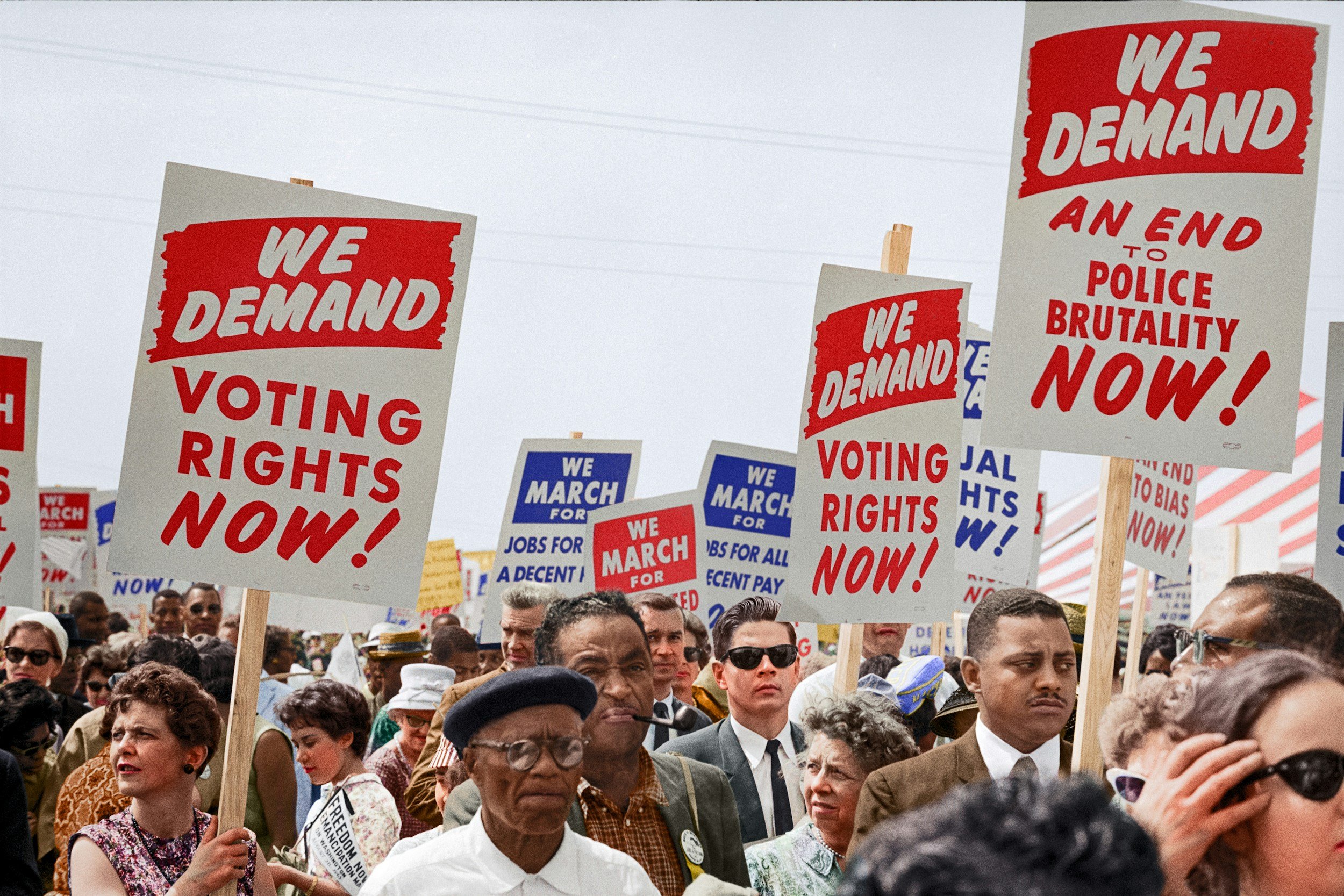
The Voting Rights Act Turned 61 This Week. Here's What's Changed Since We Last Checked In.
This past Thursday, August 6, marked sixty one years since LBJ signed the Voting Rights Act. Today, the League of Women Voters and dozens of partners are marking the anniversary with "Unite & Rise for Voting Rights," 350+ events nationwide. Good Trouble Circle isn't hosting one, but we didn't want it to pass you by.
A nationwide day of action lands the same week Maryland's and Vermont's new state voting rights laws are getting their first real test.
This past Thursday, August 6, marked sixty one years since President Lyndon Johnson signed the Voting Rights Act of 1965. Today, two days later, the League of Women Voters and dozens of partner organizations are marking that anniversary with "Unite & Rise for Voting Rights," a single day of action with more than 350 events planned across all 50 states.
Good Trouble Circle isn't organizing an event of our own today, but we want you to know it's happening, and we want to use the occasion to check back in on a story we've been tracking since spring: what happens to voting rights protection when the federal government steps back.
That might sound like a one day news cycle. It's not. It's about whether the backstop states like Maryland and Vermont built this year actually holds.
FIRST: WHAT IS A STATE VOTING RIGHTS ACT, AND WHY DO WE NEED ONE?
We wrote at length back in May about the Supreme Court's ruling in Louisiana v. Callais, which gutted Section 2 of the federal Voting Rights Act, the main tool courts used to strike down maps and rules that dilute the voting power of Black and Latino communities. If you missed it, that full piece is still up at goodtroublecircle.org/dispatch.
WHAT HAPPENED
Maryland acted first, and fast. Governor Wes Moore signed the Maryland Voting Rights Act on April 28, one day before Callais came down. It bars counties and municipalities from using election methods that dilute the vote of a protected class, and lets both the Attorney General and individual residents sue in state court to fix it. Maryland became the 10th state with its own voting rights act.
Since then, two more states have joined. New Jersey became the 11th on July 14. Vermont took a different path. Governor Phil Scott signed S.298, the Voter Protections Act of 2026, on June 8, but the version he signed is much smaller than what the Vermont Senate originally passed 28 to 0 back in March. That original bill would have added a preclearance system, multilingual ballots, a private right of action against at large election systems that dilute votes, and a Voter Education and Outreach Fund. What survived is a narrower vote denial and dilution standard enforced only by Vermont's Attorney General, with civil penalties up to five thousand dollars for a first violation and up to twenty five thousand for repeat violations, plus a new criminal charge for interfering with voters or election officials.
Meanwhile in Maryland, a separate fight over the DOJ's attempt to obtain the state's full, unredacted voter roll data ended on June 18, when a federal judge dismissed the DOJ's lawsuit against State Administrator of Elections Jared DeMarinis. It was the ninth time in 2026 a federal court has ruled against the administration's attempts to get unredacted voter data from states that refused to hand it over.
Today, two days after the anniversary, the League of Women Voters and coalition partners including Black Voters Matter, Common Cause, LULAC and the NAACP are holding Unite & Rise for Voting Rights, with more than 350 events nationwide as part of a stated goal to mobilize 8.5 million voters by November.
WHAT SUPPORTERS SAY
Delegate Vaughn Stewart, one of the architects of Maryland's law, has said the point of building state-level protection was precisely so it wouldn't depend on the Supreme Court. "Callais gutted the federal remedy, but it did not gut ours, because ours is a separate law in state court with state standards," he said. Governor Moore put it more bluntly: "Even if Washington won't protect your vote, I will."
Vermont advocates who fought for the fuller bill are more measured about what passed, but they still call it real progress. The law that emerged keeps an enforceable dilution standard and gives the Attorney General teeth to act, which is more protection than existed before, even if it's less than organizers wanted.
The League of Women Voters frames today's Day of Action as necessary given everything that's happened since April. Voter engagement and turnout, especially among young voters, is the strategy they're leaning on now that some of the old legal tools are weaker.
WHAT CRITICS SAY
Some of the same advocates who pushed for Vermont's original bill are candid that the final version fell short. An analysis from Compass Vermont concluded the law now protects candidates from interference more than it protects voters from dilution, since the preclearance system, multilingual ballot requirements, and private right of action were all stripped out before Governor Scott signed it.
On the federal side, the Trump administration has signaled it may eventually argue that Callais preempts state-level voting rights acts too, though as of this writing no such lawsuit has been filed against Maryland's law specifically. Critics of the Day of Action model, meanwhile, argue that mobilization events are no substitute for the legal protections that got weakened this spring, since higher turnout doesn't fix a map that was drawn to dilute a community's vote before ballots are ever cast.
WHAT WE DON'T KNOW YET
Whether the DOJ or private plaintiffs will directly challenge Maryland's or any other state's voting rights act on Callais grounds is still an open question. It's also unclear whether Vermont advocates will get another shot at the stronger version of their bill in a future session, or whether other states considering their own laws will end up watered down the same way. And whether today's Day of Action translates into the turnout organizers are hoping for won't be clear until ballots are actually cast in November.
See if there's still an event near you today, or find upcoming actions leading into November.
See Today's Day of ActionWHAT YOU CAN DO
- Find out if there's a Unite & Rise for Voting Rights event still happening near you today. If you're reading this after August 8, the League's site tracks ongoing actions leading into November.
- Read the Maryland Voting Rights Act guidance from the Attorney General's office so you know what protections actually exist in our state, not just what you've heard secondhand.
- If you live in Vermont or know someone who does, ask your state legislators whether they intend to revisit the fuller Voter Protections Act next session.
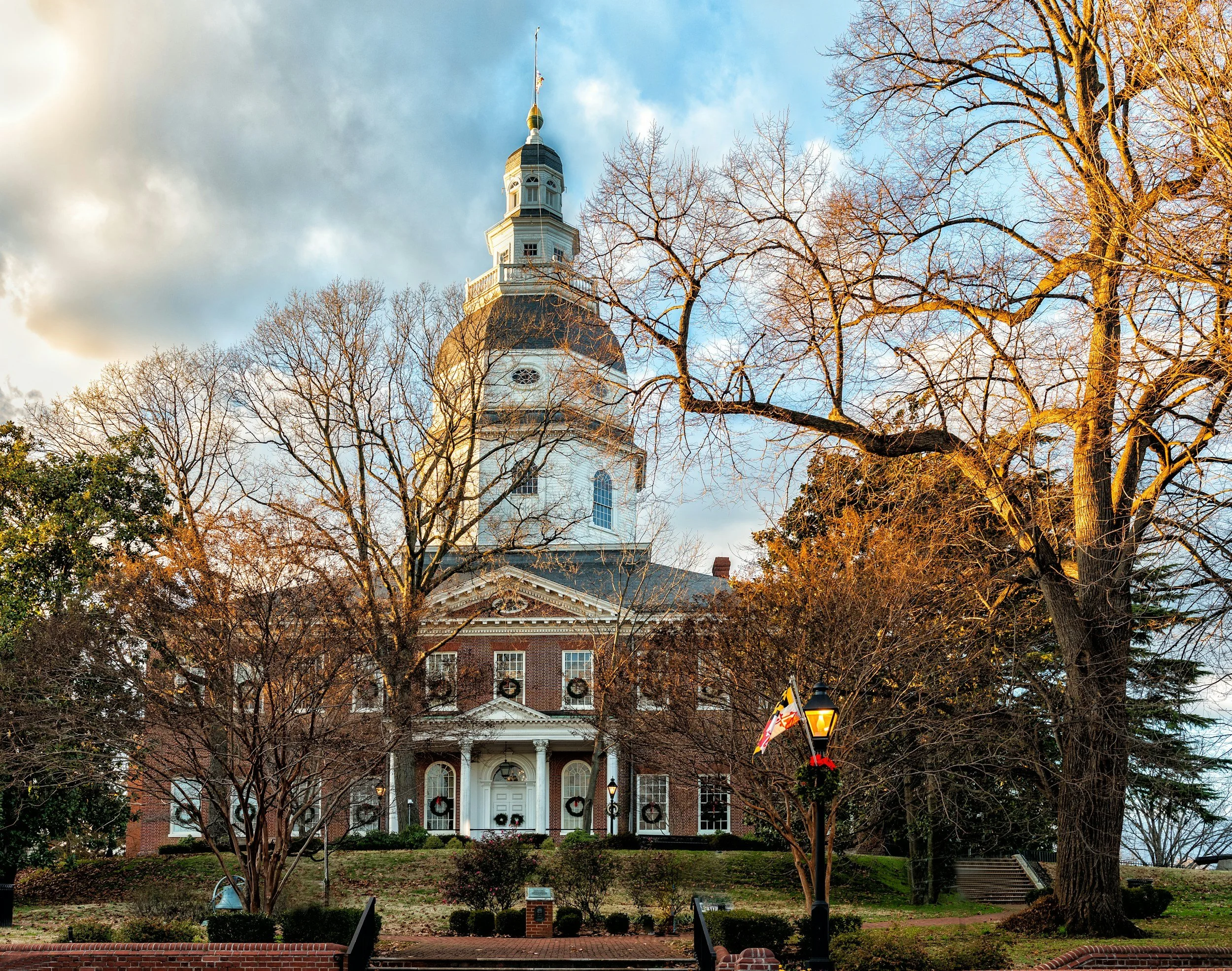
Maryland Just Voted to Let Voters Decide on Redistricting. Here’s What That Means for Queen Anne’s County.
A ballot question is coming in November, and it’s about more than maps.
Annapolis wrapped up a special session this week, and it did not draw new congressional lines. Instead, lawmakers voted to ask Maryland voters a question this November: should the state constitution be changed to give the General Assembly clearer authority over how congressional districts get drawn.
That might sound like a technical, inside the Statehouse process story. It's not. It's about whether Queen Anne's County keeps a Republican member of Congress who has represented the Eastern Shore for over a decade, and whether Marylanders vote on that outcome or have it decided for them later by a legislature that already tried once this year.
FIRST: WHAT IS A BALLOT REFERENDUM ON A CONSTITUTIONAL AMENDMENT
WHAT HAPPENED
The General Assembly convened for a special session Monday, August 3, called for the single purpose of considering this constitutional amendment, House Bill 2100 and its companion Senate Bill 2100. After nearly six hours of House debate and 20 failed floor amendments the night before, the House passed the measure Tuesday morning, August 4, on a vote of 96-38. The Senate passed it hours later, 32-13, after nine more proposed amendments failed.
The amendment does not draw a new map. It clarifies that the General Assembly has authority over congressional district boundaries, consistent with federal law, and requires the Supreme Court of Maryland to review any future congressional map before it takes effect. Any changes to congressional boundaries would not take effect before the 2028 election. Because it's a referendum, it did not need Governor Wes Moore's signature. Moore issued a statement supporting it and said he'll be pushing for a strong "yes" vote in November.
One notable moment: Delegate Thomas Hutchinson (R-Lower Eastern Shore) offered an amendment that would have put a nonbinding question on the ballot asking whether nine Eastern Shore counties, including Queen Anne's, should explore forming a separate state. It failed on a voice vote, but it captured how sharply this debate is dividing along regional lines.
WHAT SUPPORTERS SAY
Governor Moore and Democratic legislative leaders argue Maryland needs a durable, transparent constitutional framework for redistricting given recent federal court rulings on the Voting Rights Act and a 2022 state court decision that struck down an earlier congressional map. House Speaker Joseline Pena-Melnyk framed the vote as handing the decision to voters rather than lawmakers, saying the next decisions belong to the people. Supporters also point to the current 7-1 Democratic advantage in Maryland's House delegation as evidence the state's map should better reflect how Marylanders actually vote statewide.
WHAT OPPONENTS SAY
Republicans, including the entire Eastern Shore Delegation, voted unanimously against the measure. Delegate Christopher Adams, who chairs that delegation, argued the bill is squarely aimed at eliminating the Shore's lone Republican voice in Congress, warning it tells voters their vote won't matter once a map is drawn to make that seat unwinnable for a Republican. Senator Johnny Mautz argued the vote reflects a broader pattern of rural Maryland being treated as secondary to urban Maryland. Senate Minority Leader Stephen Hershey and Minority Whip Justin Ready said they expect a lawsuit challenging the referendum's path to the ballot to be filed in state court this week.
WHAT WE DON'T KNOW YET
No new congressional map exists yet, and this amendment does not create one. If voters approve it in November, the actual redrawing of Maryland's 1st Congressional District, which includes Queen Anne's County and the rest of the Shore, would happen later, and any new lines would not apply before the 2028 election. Whether the threatened state court lawsuit succeeds in blocking or delaying the ballot question is also unresolved.
WHAT YOU CAN DO
- Understand that this November's ballot will include a redistricting question. Registering to vote and confirming your registration status now, well before Election Day, ensures your voice counts.
- Talk to neighbors and family about what the ballot question actually does and does not do. A lot of confusion is already circulating about whether this vote redraws Andy Harris's district right now. It doesn't yet.
- Watch GTC's Dispatch for updates once the ballot language is finalized and if any new map proposal emerges. We'll break it down in plain language as it develops.

Maryland Went From a $5 Billion Surplus to a $3 Billion Hole. Here's What Actually Happened.
Maryland went from a $5 billion surplus to a multi billion dollar deficit in just a couple of years, and it's tempting to blame one governor. The real story runs through a 2021 veto override on a ten year education law, the end of federal COVID relief money, and a funding mechanism nobody fully worked out. This week's Dispatch breaks down what actually happened, no spin.
A number is getting thrown around in every budget fight in Annapolis right now. The real story behind it is about a promise to Maryland kids that nobody fully paid for.
You've probably seen the headline version: Governor Hogan left Maryland with a $5 billion surplus. Governor Moore turned it into a multi billion dollar deficit. Case closed, pick your side.
That might sound like a simple story about one governor being responsible and another being reckless. It's not. It's about how state budgets actually work, what "surplus" really means, and a ten year education law that Maryland committed to without ever fully deciding how to pay for it.
First: What Is a "Structural Deficit," Anyway?
That's a structural deficit. It's the difference between the money a government expects to bring in every year and the money it's already committed to spend every year, once the one time windfalls are gone. Maryland's own nonpartisan budget analysts flagged this exact risk back in 2017, years before Hogan left office and years before Moore was elected.
What Happened
In 2020, Maryland's Democratic controlled General Assembly passed the Blueprint for Maryland's Future, a ten year overhaul of public education built on the recommendations of a commission led by William "Brit" Kirwan. It expands pre-kindergarten, raises teacher pay, sends more money to high poverty schools, builds career pathways for students not headed to college, and creates an accountability board to track results.
Governor Hogan vetoed it in May 2020, citing the economic shock of COVID-19. In February 2021, the Democratic supermajority in the General Assembly overrode his veto, and the Blueprint became law without his signature.
At the same time, federal COVID relief money was pouring into state budgets nationwide, and Maryland's tax revenues kept beating projections. When Hogan left office in January 2023, the state had about $5.5 billion in reserves, roughly $3 billion in the Rainy Day Fund and a $2.5 billion structural surplus.
Then the pieces that had been propping things up started disappearing. The federal COVID money ran out. The Blueprint's costs began ramping up exactly as scheduled, since it was always designed to phase in over ten years. Medicaid and pension costs kept climbing. A separate shortfall opened in the Transportation Trust Fund. By 2025, Maryland faced a $3.3 billion structural deficit. Governor Moore and the General Assembly closed it through roughly $1.68 billion in new taxes and fees, spending cuts, and one time fund transfers. Even after that, state analysts projected a new $1.4 billion gap for the next budget year, with deficits potentially climbing back toward $4 billion later in the decade if nothing changes. The Blueprint's own dedicated funding source is expected to run dry by 2028, shifting its full cost onto the general fund.
What Supporters of the Blueprint Say
Education advocates, teachers' unions, and the Maryland State Department of Education argue the state was underfunding high poverty schools for decades, and that universal pre-K and competitive teacher pay are overdue investments, not luxuries. They point out the law was always designed as a ten year phase in with an accountability board built in specifically to track whether the money is working. In their view, a funding gap down the road is a reason to fix the funding mechanism, not a reason the underlying goals were wrong.
What Critics Say
Hogan and Republican lawmakers argue the legislature passed a massive, decade long spending commitment in the middle of a pandemic without locking in a permanent way to pay for it, then overrode a governor's veto to do it. They say Moore and the current General Assembly are now asking Marylanders to cover that gap through new taxes and fees rather than confronting the spending side of the ledger sooner. Some also argue Hogan's surplus reflected genuine fiscal discipline and revenue that outperformed projections, not just federal money, and that the "structural deficit" framing lets Moore avoid ownership of choices made on his watch.
What We Don't Know Yet
How lawmakers close the newly projected $1.4 billion gap for the coming budget year. What happens in 2028 when the Blueprint's dedicated fund runs out and its full cost lands on the general fund. Whether more tax increases, more cuts, or some combination gets Maryland back to a genuine structural balance rather than another round of one time patches. And all of this is unfolding as Governor Moore heads into a 2026 re-election campaign, which means the budget fight isn't just a policy question anymore. It's on the ballot.
What You Can Do
- Look up your Maryland state senator and delegate and ask them directly how they plan to fund the Blueprint funding gap. Contact info is at mgaleg.maryland.gov.
- Watch or attend a Fiscal Year 2027 budget hearing before the Senate Budget and Taxation Committee or House Appropriations Committee. Sessions are live streamed at mgaleg.maryland.gov.
- Check your voter registration ahead of the 2026 election at mdvote.org. State fiscal policy, and who controls it, is on the ballot.
Want the numbers behind this piece, straight from the source? The Maryland Department of Legislative Services, the General Assembly's own nonpartisan fiscal analysts, publishes the structural deficit projections cited above.
See the DLS Fiscal Briefings